Thursday, January 9, 2025

BORN AGAIN


Do you know what happened on April 14, 1957? That was the day I was baptized! Do you remember your baptism? I don’t remember mine either. I know the date because it’s on the paper stating when and where I was baptized.

You may not know when or where you were baptized, but there are people who were there, and some of them remember. Your parents, godparents and pastor were there. Maybe your grandparents, siblings, aunts, uncles and some friends.

Today, we celebrate the Baptism of Jesus. We don’t know exactly when or where Jesus was baptized. We do know that he was baptized in the Jordan River in Israel by John the Baptist.

There were other people present, but we don’t know their names. We do know that God the Father and God the Holy Spirit were also there when Jesus was baptized.

Did you know that God the Father and God the Holy Spirit were present at your baptism? God the Son – Jesus – was also there. That’s why when a pastor baptizes people, he baptizes them “In the name of the Father, Son and Holy Spirit.”

We say that phrase a lot in our worship service. We say it at the beginning of our Divine Service. And after we confess our sins, the pastor says, “… As a called and ordained servant of Christ, and by His authority, I therefore forgive you all your sins in the name of the Father and of the Son and of the Holy Spirit.”

It’s good to remember our baptism because it reminds us that Jesus died and rose for us for the forgiveness of sins and to make us His brothers and sisters, children of God our Father. And so, let us pray to God our Father.

Let us pray. Heavenly Father, from whom all fatherhood in heaven and earth is named: Bless all children, and give their fathers and mothers the spirit of wisdom and love, so that the homes in which they grow up may be to them an image of Your Kingdom, and the care of their parents a likeness of Your love. We pray in the Name of the Father and the Son and the Holy Spirit. Amen.

Wednesday, January 8, 2025

Baptism of Our Lord


God’s grace, peace and mercy be with you. My sermon is entitled “The Three B’s” and my focus is our Gospel (Luke 3:15-22). … Let us pray. Heavenly Father, the psalmist wrote, “I rejoiced when they said to me, ‘Let us go to the house of the Lord.’”[1] Now that our feet are within your gates, we rejoice to hear your Word. As we listen, may your Spirit enlighten our minds and move our hearts to love deeply as Jesus loved. This we pray to you, Most Holy Trinity. Amen.

‘The Three Bs’ is a phrase used in discussions of classical music to refer to the supposed primacy of Johann Sebastian Bach, Ludwig van Beethoven and Johannes Brahms. Although ‘the three Bs’ is associated with classical music, it is found in other disciplines. Yet, my sermon has nothing to do with classical composers, but means Baptist, Baptism and Basics. John the Baptist, the Baptism of Jesus, and the Basics of our Belief.

First, Baptist. I grew up in St. John the Baptist Church in Monaca. If you have never been in it, you should visit it. It is over 100 years old and is the most beautiful church in Beaver County with its stained-glass windows, and its marble sanctuary and altar rail. If you’ve been in it, you know that the building depicts three scenes from his life. To the left of the transept a stained-glass window depicts John preaching in the wilderness. Opposite it, a soldier clutches the hair of the decapitated Baptist. In between, a mural shows John baptizing Jesus.

Prior to Jesus’ public ministry, John attempted to change Judaism. The Evangelists cited both Malachi and Isaiah in telling their original readers that God’s messenger would be found not in the Jerusalem Temple, as they expected, but in the wilderness. We read in Malachi, “Behold, I send my messenger. He will prepare the way before me. And the Lord whom you seek will suddenly come to his temple; and the messenger of the covenant in whom you delight, behold, he is coming, says the Lord of hosts.”[2] And in Isaiah, “A voice cries: ‘In the wilderness prepare the way of the Lord; make straight in the desert a highway for our God.’”[3]

The setting of the wilderness was important because this was the staging area for the formation of Israel in its Exodus from Egypt, and now became the staging area for John’s reformation. The wilderness was where God’s people learned to trust in God’s providence and protection. This new Exodus was a symbol of hope and fulfillment. At the same time, it dismissed Israel’s institutional life.

Because John prepared people in the wilderness and not in Jerusalem, through baptism and not sacrifice, he shifted the center of authority. This shift explains why chief priests and elders refused to recognize his authority, and why he was expendable.

John’s radical message was forgiveness without sacrifice. For him, baptism was not a way but the only way to achieve repentance. By baptizing, John sought to call together the repentant and restored people of God for the imminent eschatological crisis – the end.

John’s prophetic activity raised questions of his personal identity. He assured people that he was not the Messiah and directed their expectations to another who would be far mightier. His baptism would be in fire and the Holy Spirit. This Lukan language drew attention to not only the fiery judgment for the unrepentant, but also the Spirit-life of the Church. Such preaching led Herod to incarcerate John.[4]

As Herod slammed the prison door on John, Luke opened the next door on the Baptism of Jesus, my second point.

Unlike Mark and Matthew, Luke included two details that separated his Gospel. First, he made no mention of John baptizing Jesus.[5] Second, he included an action not found in the other synoptic Gospels. For Luke, Jesus’ baptism was not the springboard for his mission. He simply noted that the baptism occurred and focused attention on a post-baptismal moment: Jesus was praying.

Mark integrated into his baptismal account the opening of the heavens, the descent of the Holy Spirit and a heavenly word. Luke incorporated these three into the moment after Jesus’ baptism when he was praying. That is because for Luke, the Holy Spirit, not Jesus’ baptism, was the creative source of his mission.

Why is that important for us? Because the Church is born out of a baptism of the Holy Spirit. We read Jesus’ words to his apostles before he ascended, “You will be baptized with the Holy Spirit not many days from now.”[6]

When Pentecost arrived, the apostles were together, when a sound like a mighty, rushing wind came from heaven. It filled the house and tongues of fire rested on each one of them. They were filled with the Holy Spirit and began to speak in other tongues as the Spirit gave them the ability to speak.[7]

That moment was the birth of the Church. That moment was the Church’s baptism by the Holy Spirit. Likewise, the descent of the Holy Spirit in our Gospel today, is Jesus’ true baptism.[8]

Before I move to my third point, the Basics, one more word about baptism. John’s baptism was not the same as other Jewish ceremonial washings, nor was it the same as later Christian baptism into the death and resurrection of Christ. Jewish washings were performed repeatedly. Christian baptism is performed only once.

You should also know that many non-Christians do not distinguish between Christian denominations. To them, churches that define themselves as Lutheran, Episcopalian, Roman Catholic, Baptist, Methodist or a myriad of micro-denominations that embrace the term nondenominational are all the same. We may have trouble sorting out other religious denominations, but we must certainly understand what we believe. So, periodically, we re-visit the basics.

Today, we look at two basics – baptism and Lord’s Supper. Lutherans believe the Bible teaches a person is saved by God’s grace alone through faith in Jesus Christ alone. The Bible tells us that such ‘faith comes by hearing.’ Jesus commands Baptism, and Scripture tells us that Baptism is water used together with the Word of God.[9] Because of this, we believe that Baptism is one of the miraculous means of grace through which God creates and/or strengthens the gift of faith in a person’s heart.[10]

Now, some denominations do not recognize infant baptism. We baptize infants because of what the Bible teaches regarding God's command to baptize. There is not a single passage in Scripture that instructs us not to baptize for reasons of age, race, or gender. On the contrary, the divine commands to baptize in Scripture are all universal in nature. Based on these commands, the Christian church has baptized infants from the earliest days of its history. Since those baptized are also to be instructed in the Christian faith, our church baptizes infants only where there is the assurance that parents or spiritual guardians will nurture the faith of the one baptized through continued teaching of God's Word.[11]

Baptism, along with the Lord’s Supper, are the two sacraments we recognize. Baptism and the Lord’s Supper are the two sacraments clearly instituted by Christ’s teaching.

When we take communion, we receive – in, with and under the bread and wine – the body and blood of Christ shed on the cross, Jesus Christ, who is now risen and ascended and sits at the right hand of God the Father. He is the same Christ, and when he gave us the Sacrament, as the Lutheran Confessions affirm, ‘he was speaking of his true, essential body, which he gave into death for us, and of his true, essential blood, which was poured out for us on the tree of the cross for the forgiveness of sins.’[12]

In this Sacrament, our Confessions teach the same Jesus who died is present, although not in exactly the same way he was corporeally present when he walked bodily on earth. Luther and the Formula of Concord speak of ‘the incomprehensible, spiritual mode of presence according to which he neither occupies nor yields space but passes through everything created as he wills ... He employed this mode of presence when he left the closed grave and came through closed doors, and in the bread and wine in the Supper.’[13]

The Good News or Gospel for us is that God comes to us in Word and Sacrament to free us from Satan, sin and death. The Good News is that Christ is not simply present in some symbolic way or represented in Word and Sacrament, but truly present. And where the Second Person of the Trinity is present, so are the Father and Holy Spirit.

I close with words St. Gregory of Nazianzus wrote in a 4th-century sermon on the Baptism of Christ.[14] “Today let us do honor to Christ’s baptism and celebrate this feast in holiness. Be cleansed entirely and continue to be cleansed. Nothing gives such pleasure to God as the conversion and salvation of men, for whom his every word and every revelation exist. He wants you to become a living force for all mankind, lights shining in the world. You are to be radiant lights as you stand beside Christ, the great light, bathed in the glory of him who is the light of heaven. You are to enjoy more and more the pure and dazzling light of the Trinity, as now you have received … a ray of its splendor, proceeding from the one God, in Christ Jesus our Lord, to whom be glory and power for ever and ever. Amen.”

My friends, God wants you to become a living force for all mankind, lights shining in the world. Be radiant lights as you stand beside Christ. Enjoy the pure and dazzling light of the Trinity, and may the peace of God that surpasses all understanding, keep your hearts and minds in Christ Jesus. Amen.


[1] Psalm 122

[2] Malachi 3:1.

[3] Isaiah 40:3.

[4] Eugene LaVerdiere, Luke. Wilmington, DE: Michael Glazier, Inc. (1986), 49.

[5] Arthur A. Just, Luke 1:1-9:50. St. Louis: Concordia Publishing House (1996), 160.

[6] Acts 1:5.

[7] Acts 2:1-4 paraphrased.

[8] LaVerdiere, 50.

[9] Ephesians 5:26; 1 Peter 3:21.

[10] http://www.lcms.org/faqs/doctrine#baptism

[11] Ibid.

[12] Formula of Concord, Solid Declaration VII, 49 or http://lcms.org/faqs/doctrine#lordssupper

[13] Formula of Concord, Solid Declaration VII, 100

[14] His commemoration is listed on January 10 in the Lutheran Service Book.

Thursday, January 2, 2025

Legacy of Love


God’s grace, peace and mercy be with you. My sermon is entitled Door to the Year, and my focus is our Gospel (Lk 2:40-52). Let us pray. Heavenly Father, the psalmist wrote, “I rejoiced when they said to me, ‘Let us go to the house of the Lord.’” Now that our feet are within your gates, we rejoice to hear your Word. As we listen, may your Spirit enlighten our minds and move our hearts to love deeply as Jesus loved. This we pray to you, Most Holy Trinity. Amen.

January, from ianua, Latin for door, since January is the door to the year, and from Janus, Roman god of beginnings and transitions, depicted with two faces, looking to the future and past. January is a time to reflect and treasure all things in your heart.

January’s first Gospel offers an opportunity to look to the past and future, an opportunity to treasure things in our hearts and a reminder to seize the moment. Hence, we look at the past – Luke and our Lutheran tradition, the future – our legacy, and the present – our lives today.

First, Luke and our Lutheran tradition. Luke included the only boyhood story of Jesus to complete his infancy narrative. This was the second of three trips Jesus made to Jerusalem’s Temple.

In the first trip, Mary and Joseph took Jesus to fulfill the Law. Two Old Testament saints, Simeon and Anna, greeted them. Simeon caused confusion and anxiety with his somber words to Mary, “This child is why many people in Israel will be condemned and others will be saved. He will be a sign that will expose the thoughts of those who reject him. And a sword will pierce your heart.” The other feature of that first story is that wisdom came from the parents observing the Law.

In the second story we heard today, Jesus again accompanied his family to Jerusalem’s Temple. This time Jesus himself caused confusion and anxiety when he was lost. His somber words to Mary compounded the situation when he said, “Why were you looking for me? Did you not know that I must be in my Father’s house?” … Talk about a sword piercing your heart! This time wisdom came from Jesus as a teacher of the Law. He could not remain with his family because it was necessary to be with his Father.

The third journey to Jerusalem was with Jesus’ new family, his disciples. Again, he went there to celebrate the Passover. His journey began in chapter 9 where we read, “When the days drew near for him to be taken up, he set his face towards Jerusalem.” During this journey, Jesus celebrated the Passover, was lost – that is, dead and buried – and was found after three days. This loss also caused confusion and anxiety. And again, wisdom came from Jesus who explained to his new family members who were searching for and found him that it was necessary to be with his Father.

Our Lutheran tradition cited our Gospel in The Formula of Concord regarding the Person of Christ. It focused on the majesty Christ possessed, and yet dispensed with, in the state of his humiliation. I quote, “’For this reason he grew in stature, wisdom, and grace before God and other people.’ Therefore, he did not reveal his majesty at all times but only when it pleased him, until he completely laid aside the form of a servant – but not his human nature – after his resurrection.”

Centuries later, Synodical President and Systematic Theologian, Pastor Francis Pieper,  wrote that Scripture clearly taught that Christ is God and Man, knew himself to be God and Man, and had a divine consciousness. I quote: “The very first recorded utterance of Jesus when He was twelve years old, clearly reveals Him as being conscious of His divine estate: ‘Why were you looking for me? Did you not know that I must be in my Father’s house?’ And his subjection to His earthly parents shows that He was conscious at the same time of His human estate.”

From Luke and our Lutheran tradition to our future, our legacy. … A lesson I learned in fundraising was to show people how to leave a legacy that outlives them. Whether you love art, education, medicine or religion, you can leave a legacy. You need not be a Carnegie, Ford, Mellon or Rockefeller. You can leave as much or as little as your estate can afford.

People leave legacies based on what they love, and people remember them for what they love. Who will remember you? Guaranteed your parents, spouse and children will remember you. Periodically, your siblings, grandchildren, nieces and nephews will think of you. Realistically, no one else will remember you fondly unless you leave a legacy of love.

Jesus’ disciples remembered him because his love led him to the cross and grave. The loving Father raised him from the dead and they imparted the Holy Spirit on the first Christians. That Holy Spirit is with us today as we remember Jesus and how he loved. Our legacy will be remembered in how we love. Whether or not our love leads to martyrdom or old age is not our choosing, but we should pray – as I do each time I open a sermon – that we love deeply as Jesus loved.

We love deeply as Jesus loved because we believe what he taught. We believe in his wisdom and that led us to baptism and the Lord’s Supper. If we love deeply as Jesus loved, people will know our legacy. More importantly, the Trinity will know.

If you want to leave a legacy of love, know this: Satan will do his best to foil you. Satan exploits your weakness. … Now, let us move from our legacy to our lives today. From the future to the present.

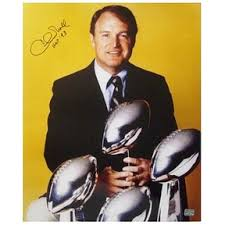
With sympathy to football widows, we are in the playoff season, and January 5th is the birthday of the only NFL coach ever to win four Superbowls and not lose one. Here is how Steeler Running Back Rocky Bleier remembered Chuck Noll, who passed away in 2014.

Bleier said, “I remember in 1974 … we went out to Kansas City to play the Chiefs. They had the main players from their recent Super Bowl team, including Lenny Dawson. We ran the ball well, we sacked Dawson three times, and we beat them. On Monday we’re going over the game film, and I was expecting Chuck to congratulate us on a great game. But not Chuck. Chuck said the reason we won this game was because of the lack of good habits formed by one person.

Chuck had a theory that we all eventually subscribed to: Habits are created every day in practice, and they carry over to the game—whether it’s 102 degrees on the field or 30, whether it’s raining or snowing, whether you have a 300-pound defensive tackle in front of you … or no one at all. In the third and fourth quarter, you don’t think; you react.

Chuck said, “The reason we won this game, gentlemen, is because of the lack of habits formed by Kansas City’s left guard. The reason why we had the sacks and forced passes and why they had no running game was because of the habits formed by the left guard.”

I was dumbfounded. For a man to lead a team, the players have to accept and buy into what he’s teaching. I thought, this man has that whole game broken down to one player. He must know everything. I bought in.”

I bought in. Are you buying in? Have you bought in to Jesus and his teaching? I believe you did. I also believe Satan exploits your weaknesses and poor habits. Folks, if a coach can detect and exploit the poor habits a player forms, think how easily Satan exploits your weaknesses and poor habits. That is why you will sin up until you draw your last breath.

Friends, you are sinners saved by Christ, but Satan can exploit even saved sinners. That is why you must form good habits. We are no better Christians than those Paul addressed in Corinth when he wrote of the need to forgive so “that we may not be exploited by Satan for we are not ignorant of his schemes.” They formed good habits.

We are no better Christians than those Peter addressed when he wrote, “Be sober and alert. Your enemy the devil, like a roaring lion, is on the prowl looking for someone to devour. Resist him, and be strong in your faith.” They formed good habits.

We are no better Christians than those James addressed when he wrote, “Submit to God. Resist the devil and he will flee from you. Draw near to God and he will draw near to you. … Humble yourselves before the Lord and he will exalt you.” They formed good habits.

Beginning today, buy in to what Jesus taught. Treasure in your heart what he taught and how he lived and died for you. His death was not peaceful, but a tortuous, violent, bloody, ignominious death for our benefit – for our salvation, eternal life and life here and now.

As we begin 2025, form good habits. Pray daily. Read scripture. Meditate. Read the Small Catechism. Listen to the Lutheran Hour and Daily Devotions podcasts. Attend Bible Study. Ask friends to point out your weaknesses so Satan cannot exploit you easily. Leave a legacy. Love.

Your legacy will not be that you read Scripture and prayed daily. But the grace of God leads you to the Word and to prayer. The grace of God changes you, and because you know God loves you – and you love God – you form good habits that make it difficult for Satan to exploit you.

When you allow God’s grace to enter your heart; when you treasure in your heart Jesus’ teaching; when you open yourself to God’s Word and Sacrament, you do not win Superbowls, you win the crown of life.

It is January, a time to reflect on the past to see how God’s grace has been poured forth into your heart and has washed away your sins through the blood of Christ on the Cross. It is time to look to the future – eternal life with Christ. It is time to start living for Christ and his Kingdom today. Beginning today, resolve to treasure deeply God’s love in your heart, and when you do may the peace of God that surpasses all understanding keep your heart and mind in Christ Jesus. Amen.

Monday, December 23, 2024

Christmas 2024


God’s grace, peace and mercy be with you. My sermon is entitled IRS. Let us pray. Heavenly Father, the psalmist wrote, “I rejoiced when they said to me, ‘Let us go to the house of the Lord.’” Now that our feet are within your gates, we rejoice to hear your Word. As we listen, may your Spirit enlighten our minds and move our hearts to love deeply as Jesus loved. This we pray to you, Most Holy Trinity. Amen.

What does Christmas mean to you? That’s a great question. I asked my Google AI, and it provided these answers. Christmas is a time to make memories with loved ones through dinner parties, coffee dates, or baking cookies. Other people say that this a time to appreciate what you have and to give gifts to others. Maybe it is a time for healing, renewed unity, and strength; or a time to bring peace into the world. For Christians, Christmas is when we celebrate the birth of Jesus Christ as the incarnation, when God became human. Some say that Christmas is a time to remember Jesus’ arrival on Earth and to give thanks for the gift of love, hope, and joy that he brought.

That’s not bad for artificial intelligence. However, AI has its limits, and creativity is one of them. You won’t find any relation between Christmas and the IRS because I just created that myself. There you go, for this Christmas, I am giving you the IRS as a present. Happy?

Let’s break down what the acronym IRS can mean besides what we know it is. By the way, AI also tells me that there are 97 other meanings of IRS with the top ones being I’ll Return Shortly and Inherited Runners Scored. Today, it’s a way to remember Incarnation, Resurrection and Sanctification. Now, I will unwrap those words in that order.

Incarnation. When is the last time you thought about the Incarnation? Its roots are Latin. Incarnationem means the act of being made flesh. The word is composed of two smaller Latin words: in meaning the same in English, and caro meaning flesh. Incarnation is the union of divinity with humanity in Jesus Christ.

The Incarnation of Jesus Christ is the mystery of the Word made Flesh. Martin Luther taught that a mystery is something we cannot explain or simply understand how something happens, but we take the truth at face value. We take at face value the mystery of a small thin wheat wafer and a tiny cup of wine as the true Body and Blood of Christ with, in and under the form of bread and wine.

2,000 years ago, when St. John wrote these six words into his Gospel, he may not have realized that the phrase would be crucial for understanding the birth of Jesus Christ. The words, “and the Word was made Flesh” (1:14), were so vital to Christianity that the Fathers of the Church incorporated them into the Nicene Creed, and we recite it every time we celebrate the Lord’s Supper. That Creed brings us to ponder how an all-powerful, all-knowing, eternal God could empty Himself into human flesh where He is a weak, finite baby capable of suffering, sickness and death.

If Christmas is a time when we remember Jesus’ birth, we must ask who Jesus is because historical figures pique people’s interest. Whether books were written about Cleopatra, Julius Caesar, Washington, Lincoln or Mother Teresa, the ink and the paper would fill this church. Yet, the number of books, documentaries, paintings and sculptures of Jesus Christ far exceed any other historical figure. So, the Incarnation begs us to ask who Jesus was.

Jesus referred to himself as Son of Man, and one day asked his disciples, “Who do people say that the Son of Man is?” After saying that he was one of the prophets, Jesus pressed them. “Who do you say that I am?” Simon Peter replied, “You are the Christ, the Son of the living God.”

Peter’s answer set Jesus above all the prophets who were the adopted sons of God; it made Him the natural Son of God. This natural Divine Sonship was made known to Peter only by a special revelation. Flesh and blood did not reveal the true identity to Peter, only Jesus’ Father in heaven. Jesus assumed this important title, the Christ, and admitted that He is the Son of God in the real sense of the word. Jesus is the Christ, the Messiah, the Savior. Jesus is your Savior. Jesus is my Savior.

Now, we all have pictures of our loved ones hanging on our walls, sitting on our desks, posted on our social media pages and embedded in our phones. What about Jesus? Do you have a picture or painting of Jesus in your home? Have you hung a cross or better yet, a crucifix, on your wall?

In our home during the Christmas Season, we position a ceramic nativity set in a prominent place so that we can meditate on the Incarnation. That an almighty, awesome God would take on human flesh within the womb of the Virgin Mary for nine months, and be born as everyone of us is unfathomable. The nativity set helps us appreciate this mystery.

Resurrection. Let’s move on to the Resurrection. In four months, we will celebrate the most spectacular event not only in Jesus’ life, but also in history. How do we fathom the mystery of the Resurrection? The mystery of a man dead for three days raised to new life, eternal life? Again, as Luther said, we cannot understand or explain it, but we can accept it by faith and through the power of the Holy Spirit.

Also hanging in our home is an original painting given to me by an artist, a Sister of Divine Providence, more than 30 years ago. It is a painting of the Crucified Christ. From a distance you see Christ hanging on His Cross. Step closer and you see Mother Mary and St. John the Beloved Disciple, flanking Him. Stand within a foot of the painting, and it reveals to your eyes a myriad of saints and angels surrounding His throne, His Cross. To speak of the Resurrection means that you must speak of Christ’s Crucifixion. The wood of the crib becomes the wood of the cross.

Last month, we remembered all those who died over the past year. For some, death is the end of life. Many people do not believe in an afterlife. For them, there is no hope or future; no punishment or hell; no heaven or an unmerited reward. There is nothing further in the mind or heart of the unbeliever. Sad, but true.

But for the believer, the Christian, the Resurrection means that you will be raised on the Last Day. On that Day, all the dead will be raised and all will be judged by the Glorious Christ. On that Day, all apparent contradictions will be perfectly and happily resolved. On that Day, your sufferings and trials will make sense, for God will make all things new.

Folks, the resurrection of the dead is one of the neglected portions of the Apostles’ Creed. Even though we recite this Creed often, we may miss out on the inexpressible, glorious hope which God promises us. Just as Christ has been raised from the dead, we too shall be raised to new life. That is Christ’s promise to you, and God does not break His promises. And finally, we move from Resurrection to Sanctification.

Sanctification. Martin Luther’s Large Catechism explains the Third Article of the Apostles’ Creed: “I believe that the Holy Spirit makes me holy by the Christian Church, the forgiveness of sins, the resurrection of the body and the life everlasting.” In this life, we need the Church, through which our sins are forgiven for the sake of Jesus Christ. Daily contrition and repentance is necessary to start new, to start fresh. And so, every day we recall our sins and our Baptism. We ask God for forgiveness and accept His free gift of grace, the forgiveness of our sins.

Again, Luther in the Large Catechism: “We will come forth gloriously and arise in a new, eternal life of entire and perfect holiness.” Daily, we grow in sanctification, but still contend with sin. One day, our struggle against sin, death, and the power of the devil will be over. We will no longer fight against the infernal foe, but shall shine like the stars, at peace for all time.

On this Christmas Day, throughout this Christmas Season, and beyond the celebration of Epiphany, how do we live lives of sanctification? Well, we’re off to a good start. We are gathered here to worship our Triune God: Father, Son and Holy Ghost. We are challenged, comforted and enthused by God’s Word; nourished and strengthened by Christ’s Body and Blood; forgiven of our sins.

In about thirty minutes, we will leave here to return to our homes and love our family members and neighbors by exchanging gifts and breaking bread. However, that feeling may last no longer than this sermon. The so-called “magic” of Christmas lasts no longer than the happy ending of a Hallmark movie. Before New Year’s Day, most of us are back to the old grind, personifying the Old Adam. So, what’s the solution?

Friends, there is no “solution.” There is only sanctification. There is only practice. Daily, you must submerge yourself in the Word longer than you immerse yourself in Wordle. Daily, you must truly forgive your spouse, your children, your parents and your neighbor because God has forgiven you. Daily you must go beyond being a believer; you must practice being a saint. Daily you must be more than a group or believers or simply a sole congregation; you must practice what you profess and be a communion of saints. Because God has sanctified each and every one of you, you must make Christmas today and every day for at least one person or many people by loving God and loving neighbor.

Nine days ago, Cindy and I did something that made a lot of people happy if only for a few minutes or an hour. We brought Maggie to church and then Cindy took her Christmas caroling. In comparison to hearing God’s Word and receiving Christ’s Body and Blood, Maggie’s presence does not compare, but for those residents at the Beaver Falls Personal Care Home, taking Maggie there made many people feel loved. Unfortunately, most of you do not have a Maggie, and you may not want to take your dog to a personal care home.

So, in the spirit of Martin Luther, who often railed about people’s bad behavior in his Christmas sermons before he reminded them of their daily duty to love God AND neighbor, let me conclude with this. When you love God and neighbor, you properly celebrate Christmas (Incarnation), Easter (Resurrection) and life (Sanctification) every day. That said, I pray that you enjoy not only a Merry Christmas, but also a Christ-filled life. Live Christmas daily, and may the peace of God that surpasses all understanding, keep your hearts and minds in Christ Jesus. Amen.


Saturday, December 21, 2024

ADVENT 4


Do you think that there are angels? The word angel means messenger, and most people do think that there are angels. The Bible teaches that angels were made by God during the six days of creation, although it doesn’t say on which day.

They do not have a body, but angels are powerful, intelligent spirits. Good angels guard and protect God’s children (Ps.91:11ff), but evil angels hold unbelievers captive (Luke 11:21f; Eph.2:2). Believers, however, can resist the temptation of evil angels through the power of God (Eph.6:10-17).

There have lots of books and songs and movies and shows about angels. As Lutherans, we sing about angels. Our songs include: The Angel Gabriel from Heaven Came; Angels from the Realms of Glory; and Hark! The Herald Angels Sing. Do you know any of those? Maybe your parents know them. … Some people say that they have seen angels and talked to them, but none of them has ever had a conversation with an angel like Mary did.

In the Gospel of Luke, the Angel Gabriel greeted Mary and told her that God chose her to give birth to a baby. Mary believed the angel and asked how this would happen. Gabriel told her that she should name her baby, Jesus. Jesus would be her son, and the Son of God.

 As important as angels are to God, do you know who is more important to God? You! God made you even higher than the angels. God loves you so much that He gave you His Son as your Savior. So, while it’s important to believe in angels, it is even more important to believe in Jesus and carry Him in your heart like Mary did because Jesus gives you life with God in Heaven.

And now, let us pray. Heavenly Father, from whom all fatherhood in heaven and earth is named: Bless all children, and give their fathers and mothers the spirit of wisdom and love, so that the homes in which they grow up may be to them an image of Your Kingdom, and the care of their parents a likeness of Your love. We pray in the Name of the Father and the Son and the Holy Spirit. Amen.

Wednesday, December 18, 2024

3 M's of Advent


God’s grace, peace and mercy be with you. My sermon title is Magnificat, Martin and Mentor and my focus is our Gospel (Luke 1). Let us pray. Heavenly Father, the psalmist wrote, “I rejoiced when they said to me, ‘Let us go to the house of the Lord.’” Now that our feet are within your gates, we rejoice to hear your Word. As we listen, may your Spirit enlighten our minds and move our hearts to love deeply as Jesus loved. This we pray to you, Most Holy Trinity. Amen.

Magnificat. Luke’s canticle of Mary’s prayer, known as the Magnificat, is based on the first word of the Latin translation. The English translation reads, “My soul doth magnify the Lord.”[1] In Latin, “Magnificat anima mea Dominum.” To magnify comes from the Latin word magnificare. It means to increase the size. As Luke understood the word, he wrote “to declare the greatness of.”[2]

Hannah’s prayer and many other Old Testament passages inspired the form and content of Mary’s Magnificat. In 1st Samuel, we read, “Hannah prayed and said, ‘My heart exults in the Lord…’”[3] Both canticles declared God’s holiness at their beginning and end.

The Magnificat’s opening statements focus on what Mary experienced personally. God’s choice of her to be the mother of Christ began a pattern of divine action that recurred throughout the Gospel. In other words, in this classical statement of God’s activity: the lowly are raised and the lofty are brought low.[4] As a mighty challenge to the existing structures of power and oppression,[5] the Magnificat states that God bypassed those at the center of power in favor of the marginalized and the lowly, including the lowly yet blessed Mary.[6]

Moving on from her own experience to that of her own people, Mary announced this reversal in values, echoing the Beatitudes and a major theme of Luke’s Gospel. Israel’s devout, poor and lowly clung to the ancient promises and longed for the time of salvation. The Magnificat ends with Mary acknowledging that this longed-for era arrived, and invites Israel to join her in her song and make her experience of salvation their own; for to speak of what God has done is to announce what God will do.[7]

In summary, the passage notes two characteristic Old Testament ideas. First, God comes to help not the rich and powerful but the poor and simple.[8] We read this throughout the Scriptures, but the Prophet, Zephaniah, expressed it best. “Seek the Lord, all you humble of the land, who do his just commands; seek righteousness; seek humility; perhaps you may be hidden on the day of the anger of the Lord.”[9]

The second idea is that ever since Abraham received God’s promises, Israel has been God’s favored one. Recall the passage in Genesis which reads, “The word of the Lord came to Abram in a vision: ‘Fear not, Abram, I am your shield; your reward shall be very great.’ … And he brought him outside and said, ‘Look toward heaven, and number the stars. …So shall your offspring be.’”[10] Deuteronomy repeated the promise. “You are a people holy to the Lord your God. The Lord your God has chosen you to be a people for his treasured possession, out of all the peoples who are on the face of the earth. … because the Lord loves you and is keeping the oath that he swore to your fathers.”[11]

Mary’s Magnificat simply described the mighty arm of God that scattered the proud and arrogant, and remembered His promises.[12] And so, we move from Magnificat to Martin.

Martin. Among other things, Martin Luther criticized the Catholic Church in the 16th century for its promotion of devotions to the saints. His complaint was with misguided, ignorant, greedy priests who preached something other than pure Gospel which careless or self-seeking bishops promoted or tolerated.

But first, we must distinguish between Luther’s criticism of certain practices and his thoughts on Mary, Mother of Christ. While Luther attacked externalism in religion, the absence of sincerity in worship, and the gap between professing lips and unfaithful hearts, he was not against Mary or singing the Magnificat.

Luther believed it was a fine custom to sing the Magnificat in all the churches daily at vespers. Note that the Lutheran Service Book includes the Magnificat in Evening Prayer. (Anglicans and Roman Catholics include it as well.) Note further that we proclaim this Gospel on the Feast of the Visitation (July 2).[13]

In Luther’s words, the Magnificat’s opening reminds us that God “does nothing but exalt the lowly and lower the exalted. He breaks whatever is whole and makes whole whatever is broken.”[14] “Great things are nothing less than she became the Mother of God, for on this there follows all honor, all blessedness, and her unique place in the whole of mankind, among which she has no equal, namely, that she had a child by the Father in heaven.”[15]

When people praise and honor us, Luther wrote, “we ought to profit by the example of the Mother of God and at all times arm ourselves with [the Magnificat] to make the proper reply and to use such honor and praise correctly.”[16]

At one point, Luther reflected, “It needs to be pondered in the heart what it means to be the Mother of God. Her sole worthiness to become Mother of God lay in her being fit and appointed for it, so that it might be pure grace and not a reward.”[17]

Finally, with Philip Melanchthon, Luther cited the purification account in Luke, writing, “She was purified according to the Law of Moses in keeping with the custom of all women. Although she was not bound by such a law, nor was there need for her to be purified, she submitted herself to the law voluntarily and in unbound love. She was not justified by this work, but having been justified, she did it freely and without coercion. [We do not] act for the sake of being justified, since, having been justified by faith, we ought to do all things freely and cheerfully for others.”[18]

Martin Luther said much more about Mary and the Magnificat, but as I move from Martin to mentor, remember that last phrase: do all things freely and cheerfully for others.

Mentor. The story of Mentor comes from Homer's Odyssey. Odysseus, King of Ithaca, fought the Trojan War and entrusted his son, Telemachus, to a teacher and overseer named Mentor.

After the war, Odysseus wandered vainly for ten years trying to return home. Telemachus, now grown, searched for his father. Mentor accompanied Telemachus on his quest. After father and son reunited, they cast down would-be usurpers of Odysseus' throne and Telemachus’ birthright.

The word Mentor evolved to mean trusted advisor, friend, teacher and wise person. Mentoring is a fundamental form of human development where one person invests time, energy and personal experience to assist another person’s growth and ability.[19] Examples of mentoring relationships include Socrates and Plato, Haydn and Beethoven, Freud and Jung. In the Bible, we see these relationships between Jesus and His disciples, Barnabas and Paul, Paul and Timothy, Naomi and Ruth, Elijah and Elisha, Moses and Joshua, and Elizabeth and Mary.

The essential qualities of a mentor are personal credibility and experience. Mentors look for “teachable moments” that expand or realize the potentialities of the people they lead.

The most common mentoring techniques in business include accompanying, sowing, catalyzing, showing and harvesting. Mentors ask the key questions: “What did you learn?” and “How useful is it?”

I could say more about mentoring. It is my last point for this reason: As mature adults, we see ourselves as mentors to younger protégés. We value the benefits of mentoring younger adults in the corporate, collegiate and clerical spheres, among athletes, actors and artists, for musicians and military personnel. We even value reverse mentoring – learning from younger people how to program our smart phones and computers.

I am sure we agree that everyone benefits from mentoring, but have I incorporated mentoring into my spiritual life? As I grew in age, did I grow in wisdom and grace? Can I grow in wisdom and grace without seeking advice or guidance from a spiritual mentor? Can young adults and teens grow in wisdom and grace without spiritual mentors?

Serena Pace, the Director of Christan Education at Grace Lutheran Church in Arlington, Texas, addressed spiritual mentoring that addressed the problem of teens and young adults leaving the Lutheran Church.[20] Pace concluded that younger people benefit from an older person who walked similar life patterns. “An older person can share life experiences from a credible standpoint and offer wise counsel and guidance.”[21] Mentors extend beyond pastors and church workers to mature men and women who have walked life’s roads and traveled its journeys with the Spirit.

Mature men and women can offer wise counsel and guidance, but only if they themselves continue to seek counsel and guidance from others who journeyed before them. That is why we turn to Martin Luther and Mary’s Magnificat. That is why Martin turned to Johann Von Staupitz, Mary to Elizabeth, the disciples to Jesus, Paul to Barnabas, and so on. In every age and culture, young men and women need an older person who walked similar life patterns.

After high school, I was not sure what I wanted to do. I attended Penn State for a year, and then a vo-tech school before getting a job at Babcock and Wilcox where I worked for four years. During that time, I discerned my call to ministry. I could see myself as a preacher, but was not sure how to get there. Mentors guided me to finish college with a degree in Philosophy, and then Masters degrees from Christ the King Seminary, Duquesne University and the University of Pittsburgh. The last landed me positions as a professional development director.

Throughout my years in the seminary and ministry, I sought spiritual guidance and counsel from men and women who practiced and pondered their faith. More than a decade ago, I realized this truth: older people are much more interesting than younger people. Why? Because they have more life experiences.

I have spent more than 40 years listening to people in their 80s and 90s tell me about their life experiences. Now, I benefit not only by listening to seasoned men and women who walked with God, but also by reading about sinner-saints who journeyed with the Holy Spirit.

To whom do you turn? An elderly relative living out her days in a nursing home? A retired pastor with decades of education and experience? The writings of Dietrich Bonhoeffer or C.S. Lewis? Do you turn to Martin Luther or Mary Mother of God when life presents situations that challenge your integrity and loyalty – not for intercession, but for wise guidance? Can Martin or Mary mentor us?

As the Gospels, the Cross of Christ and the Magnificat served as mighty challenges to the existing structures of power and oppression in another age and culture, do they serve the humble and oppressed who pin their hopes on God’s promises today?[22] As Mary invited a new Israel to join her in song, do we dare to sing with Mary, Zechariah and Simeon what God has done for us? Do we celebrate with them the arrival of a longed-for Kingdom?

The Magnificat is a commentary on Mary’s status as a feminine servant, in her submission to the word of the Lord as a representative of those characterized by humility. We know that God’s selection of Mary and her submission were not hindered by, but in fact were facilitated by, the lowliness of her condition.[23]

As mentors or servant-leaders, we keep that lowliness in mind. Christian leadership cannot assume the ways of human power for it affects the quality of Christian nourishment at the Lord’s table.[24] Brothers and sisters, having been justified by faith, and sanctified by the Holy Spirit, we ought to do all things freely and cheerfully for others.[25] When we do, may the peace of God that surpasses all understanding, keep your hearts and minds in Christ Jesus. Amen.[26]


[1] Luke 1:46.

[2] Herbert G. May and Bruce M. Metzger, Editors, The New Oxford Annotated Bible with the Apocrypha, Expanded Edition, Revised Standard Version. New York: Oxford University Press (1977), 1242.

[3] 1 Samuel 2:1ff.

[4] Fred B. Craddock, Luke. Louisville, KY: Westminster John Knox Press (2009), 30.

[5] Brendan Byrne, The Hospitality of God: A Reading of Luke’s Gospel. Collegeville, MN: The Liturgical Press (2000), 26.

[6] Byrne, 25f.

[7] Craddock, 30.

[8] Alexander Jones, General Editor, The Jerusalem Bible. Garden City, NY: Doubleday and Company, Inc. (1966), 93.

[9] Zephaniah 2:3.

[10] Genesis 15:1-5.

[11] Deuteronomy 7:6-8.

[12] Arthur A. Just Jr., Luke 1:1-9:50. St. Louis: Concordia Publishing House (1996), 85.

[14] Edward M. Plass, What Luther Says. St. Louis: Concordia Publishing House (1959), #2094.

[15] Plass, #4006.

[16] Plass, #3425.

[17] Plass, #4006.

[18] Martin Luther and Philip Melanchthon, Christian Freedom: Faith Working Through Love. St. Louis: Concordia Publishing House (2011), 74f.

[20] Serena Alexandria Pace, Young Adults Leaving the Church: The Tie to Intentional Spiritual Mentoring Among Lutheran Church Missouri Synod Teens Through Youth and Confirmation Ministry, Portland, OR: George Fox University (2013). See http://digitalcommons.georgefox.edu/cgi/viewcontent.cgi?article=1112&context=dmin.

[21] Pace, 120.

[22] Byrne, 26.

[23] Just, 83.

[24] Eugene LaVerdiere, Luke. Wilmington, DE: Michael Glazier, Inc. (1980), 23.

[25] Martin Luther and Philip Melanchthon, Christian Freedom: Faith Working Through Love. St. Louis: Concordia Publishing House (2011), 74f.

[26] Philippians 4:7. Lutheran teaching on Mary: http://cyclopedia.lcms.org/display.asp?t1=m&word=MARIOLOGY; and http://en.wikipedia.org/wiki/Luther%27s_Marian_theology; Luther on the Magnificat by Donal Flanagan http://www.esbvm.org.uk/wp-content/uploads/2009/06/Flanagan01.pdf and Works of Martin Luther, The Magnificat: Translated and Explained 1520-1521  http://www.godrules.net/library/luther/NEW1luther_c5.htm