Wednesday, July 3, 2024

Jesus Rejected


God’s grace, peace and mercy be with you. My sermon title is Hometown, Healing and Hospitality. My focus is Mark (6:1-13). Let us pray. Heavenly Father, the psalmist wrote, “I rejoiced when they said to me, ‘Let us go to the house of the Lord.’”  Now that our feet are within your gates, we rejoice to hear your Word. As we listen, may your Spirit enlighten our minds and move our hearts to love deeply as Jesus loved. This we pray to you, Most Holy Trinity. Amen.

Have you done much research into your hometown? How did your hometown get its name? Who are its most celebrated citizens? Most people know something of their hometown. They know the founders, the famous and infamous people, how it got its name and so on. Where I grew up and currently live, the township is named in honor of the Potter Brothers, James and Robert, successful businessmen of their time.

The most common names of hometowns in the US are Washington (88), Springfield (41), Franklin (35) and Greenville (30). There is also a suburb of Chicago named Hometown. Bordered by 87th Street on the north, and 91st on the south, Cicero to the west and Pulaski to the east, fewer than 4,400 people live there. Hometown has produced no celebrities. On the other hand, my father’s hometown of Aliquippa, produced musician Henry Mancini, Surgeon General Jesse Steinfeld, and Hall of Fame athletes Pete Maravich, Ty Law, Darrelle Revis and Mike Ditka.

Celebrities aside, hometown is where you were born, grew up or your principal place of residence. I open with hometown because for the first time in Mark’s Gospel Jesus returned to his hometown. Nazareth was a small, insignificant village of a few hundred inhabitants. Here, one might expect a warm welcome and enthusiastic acclaim, but Jesus met a very different response.

According to his usual custom, on the sabbath Jesus entered the synagogue to teach. At first the villagers seemed to react in the same way as other audiences: they were astonished at his wisdom and authority. But in this case, the astonishment seems inappropriate and out of place. In their minds Jesus was just one of the guys, someone they knew all their lives. They never saw anything extraordinary about him. All this itinerant preaching and miracle-working seemed to them to be putting on airs.

Their questions displayed not a sincere pursuit of truth but rather indignant skepticism. Isn’t he the carpenter? Isn’t Mary his mother? They pigeonholed Jesus because they were confident that they knew all about him and could not accept that he might be from God.

Wisdom and mighty deeds are attributes of God himself. Of God’s wisdom, we read in Jeremiah, “It is [the Lord] who made the earth by his power, who established the world by his wisdom, and by his understanding stretched out the heavens.” The prophet Daniel affirmed, “Blessed be the name of God forever and ever, to whom belong wisdom and might.”

Regarding God’s might, “Moses implored the Lord his God and said, ‘O Lord, why does your wrath burn hot against your people, whom you have brought out of the land of Egypt with great power and with a mighty hand?’” Jesus’ ancestors knew that God brought them out of slavery by his mighty hand and the outstretched arm. However, they could not bring themselves to draw the logical conclusion of their reasoning concerning Jesus’ wisdom and might.

They were scandalized and offended that a hometown boy might be inaugurating the Kingdom of God because it did not conform to their preconceived ideas about how God would and could act. Their attachment to their ideas became the obstacle to their faith. Earlier in Mark, we read about such people: “They may indeed see but not perceive, and may indeed hear but not understand, lest they should turn and be forgiven.”

And so, Jesus cried out, “A prophet is not without honor, except in his hometown and among his relatives and in his own household.” In doing so, he linked his destiny to that long line of Old Testament prophets who suffered rejection or violence because of their unpopular message. We find this in more than six Old Testament books.

The Chronicler (Book of Chronicles) wrote, “The Lord, the God of their fathers, sent persistently to them by his messengers, because he had compassion on his people and on his dwelling place. But they kept mocking the messengers of God, despising his words and scoffing at his prophets, until the wrath of the Lord rose against his people, until there was no remedy.” Nehemiah prophesied, “Nevertheless, they were disobedient and rebelled against you and cast your law behind their back and killed your prophets, who had warned them in order to turn them back to you, and they committed great blasphemies.”

In his hometown, the failure of his kinsfolk to accept Jesus was symbolic of their rejection: “He came to his own, and his own people did not receive him.” Jesus could do little more there than heal a few sick people. Now, before I begin my second point, I leave you with a question: Like the people in his hometown, how do I reject Jesus’s teachings, God’s teachings?

My second point is healing. When we talk about healing, we mean restoring someone to health or the process of getting well. In antiquity healing had two aspects: professional medicine and faith healing. We think of the Greek physician, Hippocrates, commonly known as the father of medicine because he professionalized it. The Hippocratic Oath included the principles of medical confidentiality and non-maleficence, that is, do no harm. Even today medical graduates swear a modified form of the Oath.

Faith healers used herbs, amulets, charms and chants. They performed exorcisms and interceded with the gods of healing. In the Old Testament priests were the custodians of public health. Levitical laws concerned diet, health, sexual practices, quarantine and the Sabbath rest because they were seen as God’s concern for physical health.

Jesus is represented as a healer of multiple physical and psychiatric diseases, but he did not use magical practices. He healed through voice commands and physical touch. The early church continued Jesus’ healing ministry, as we read about Peter healing a man in Acts. And in James we read, “Is anyone among you sick? Let him call for the elders of the church, and let them pray over him, anointing him with oil in the name of the Lord. And the prayer of faith will save the one who is sick, and the Lord will raise him up. And if he has committed sins, he will be forgiven.”

Here, however, Jesus only cured a few sick people, and the reason Mark put it this way is because he wanted to highlight the necessity of faith, that is, a basic openness to God’s power at work in Jesus, as the proper disposition for receiving his healing. Despite the atmosphere of unbelief in Nazareth, Jesus cured people by personal touch.

Ironically, Jesus marveled at the Nazoreans’ lack of faith. He showed the same emotion that characterized others who reacted positively towards him. In the previous chapter of Mark, after Jesus healed the man possessed by an evil spirit and told him to return home to his friends to tell them how merciful the Lord was to him, everyone marveled. In Luke’s version of Jesus calming the storm, his disciples marveled. Here, Jesus marveled at their lack of faith. Few things caused Jesus to react so strongly as a lack of faith, or conversely, great faith. Matthew recounted how Jesus marveled at the great faith of the Centurion and the Canaanite woman.

I will return to healing in my conclusion but before moving onto my third point, another question: How does my pride and self-reliance keep me from fully trusting Jesus’ healing powers?

Finally, hospitality. Hospitality is the friendly reception and treatment of guests or strangers in a warm, friendly and generous way. We derive hospitality from the Latin word hospes, meaning host, guest or stranger. The word hospital originally meant a guest-chamber, guest's lodging or an inn. In ancient cultures hospitality involved welcoming the stranger and offering him food, shelter and safety.

In Ancient Greece, hospitality was a right, where the host was expected to make sure the needs of his guests were met. A person's ability to abide by the laws of hospitality determined his nobility and social standing. In India hospitality is based on a principle where the guest is God. Whenever I have visited a home of a person from India, I noticed how gracious they are, offering drink and food, even on a brief visit.

Judaism praises hospitality to strangers and guests based largely on the examples of Abraham and Lot in the Book of Genesis. Hosts were expected to provide nourishment, comfort and entertainment for their guests, and at the end of the visit, hosts customarily escorted their guests out of their home and wished them a safe journey. These stories set the tone for biblical teaching. God is both the guest and the gracious host who befriended the Israelite people while they were strangers. Because they were once sojourners, the Israelites esteemed the stranger and the sojourner.

Jesus too is guest and host. Throughout his life, he remained a wayfarer who depended upon the hospitality of others: Matthew the tax collector, Simon the leper, Peter, Martha and Mary, as well as Mary Magdalene, Joanna, the wife of Chuza, Herod’s household manager, Susanna, and many others, who provided for him and his disciples out of their means.[18] As host, he washed his disciples’ feet and broke bread for them to eat.

In our passage today, Jesus instructed his disciples to take nothing but the clothes on their backs, sandals and a walking stick. Mark included these items in his passage to emphasize that discipleship meant walking on the way with Jesus. Their lack of a sack meant that they could not accept coins or other goods from people. They could not rely upon their own resources but had to learn how to depend upon God’s all-sufficient providence. We read in Second Corinthians, “He who supplies seed to the sower and bread for food will supply and multiply your seed for sowing and increase the harvest of your righteousness.” Paul concluded that he could “do all things through him who strengthens [him],” because he “learned the secret of facing plenty and hunger, abundance and need.”

Because they were occupied not with daily needs, but God’s work, they would be free of distractions and remained focused on their mission. Their need for food and shelter would call forth generosity from those to whom they ministered. And their lack of material possessions lent credibility to their message since it demonstrated that they were preaching the Gospel out of conviction and not a desire for gain.

Allow me, now, to share a personal story of receiving another’s hospitality. I have told you this before, but it bears repeating. On January 6, 2014, our first grandchild, Emma, was born in Anderson, Indiana. At the time, my wife, Cindy, and I lived in Edmond, Oklahoma. The travel time between our house and Emma’s hospital was 12 hours … under normal circumstances. We left Oklahoma at 6:00 a.m. planning to arrive in Indiana by suppertime. Instead, we hit one of the worst ice storms in Illinois. By evening traffic came to a standstill. We were in Effingham, a small city intersected by Interstates 57 and 70. It has 20 hotels, but because every room was filled, we spent our first night at the Effingham Performance Arts Center on cots with 200 other travelers. Truckers, parents, infants and toddlers all crammed into one open space on cots. Cindy and I got no sleep that night.

The next morning, I learned that we would not be able to continue our trip and make Anderson by nightfall. We did not want to spend another night at the Performing Arts Center. So, being a Lutheran pastor, I looked up the Lutheran Church in Effingham. We called St. John’s Church. I explained to the secretary our plight. A few minutes later, the church president called and offered us a place to sleep. He met us and we followed him to his home. He then invited us to lunch. After lunch, we returned to his home, showered and napped. A few hours later, he asked if we would like to go to dinner with some friends. We obliged. The next morning, we headed out. We avoided the interstate and kept to state roads. We arrived in Anderson that afternoon. There and then, we saw and held our first granddaughter.

I tell you this story because we experienced Christian hospitality firsthand from the president of a Lutheran congregation in Effingham, Illinois. Hospitality is who we are as Christians. Hospitality is our ministry as individuals and as church.

How do we show hospitality to those who minister to us so that they are not distracted by daily concerns but can focus on their mission, the Gospel, the work of God? How do I not show hospitality for the Holy Spirit in my heart? What things do I do to drive Him away? Would I open my home, table and bed to a sojourning pastor and his wife?

My friends, extending hospitality in the name of Jesus Christ heals more hearts and souls than almost anything we can do in this world. If we want to heal our world, our nation, our neighborhoods and our families, we will by extending our homes, hands and hearts to people who may be seeking shelter, food and a warm bed, but unconsciously are seeking salvation … from the one who had no place to lay his head. Offer yourself to those who seek Christ as He offered himself to you and me, and when you do, may the peace of God that surpasses all understanding keep your hearts and minds in Christ Jesus. Amen.

Wednesday, June 26, 2024

Models


God’s grace, peace and mercy be with you. … My sermon today is entitled Models in Mark and the Church, and my focus is our Gospel (Mark 5:21-43). Let us pray. Heavenly Father, the psalmist wrote, “I rejoiced when they said to me, ‘Let us go to the house of the Lord.’” Now that our feet are within your gates, we rejoice to hear your Word. As we listen, may your Spirit enlighten our minds and move our hearts to love deeply as Jesus loved. This we pray to you, Most Holy Trinity. Amen.

My younger brother worked with a guy who was a model. Professionally, both Ed and his friend were chemists, but his friend occasionally did some modeling. He was not your ordinary model strutting the stage wearing the latest fashion. He was a hand model. I mention my brother’s friend for a reason. There are two models in our Gospel who show us not the latest in Middle Eastern clothing and accessories, but how to approach Jesus. Hence, the three points of my sermon are the word model, Mark’s models (Jairus and the unknown woman), and Models of the Church.

First, an examination of the word. The word model is a noun, verb and adjective. The adjective precedes words like trains, planes and automobiles. As a boy, I had model trains, planes and cars. Henry Ford used the word to describe a motor vehicle of a particular design, such as the Model T. Model comes to us from the Latin word modulus meaning a small measure or a standard for imitation or comparison or a thing or person that serves or may serve as a pattern or type. It is only in 1915 when we employed the word to mean one who displays clothes.

Biblically, the word is used throughout the Old and New Testaments. Although the Old Testament speaks more of models of altars, chariots and tumors, there is one mention of the word in Ezekiel which reads, “Son of man, sing this funeral song for the king of Tyre. Give him this message from the Sovereign Lord: “You were the model of perfection, full of wisdom and exquisite in beauty.”[1]

The use of the word in the New Testament has more to deal with lifestyle and behavior than objects. Paul wrote to the Thessalonians, “And so you became a model to all the believers in Macedonia and Achaia.” Later he wrote, “We did this, not because we do not have the right to such help, but in order to offer ourselves as a model for you to imitate.”[2] Because he was not shy about encouraging others to imitate himself, he told the Christians at Phillippi to, “Join together in following my example, brothers and sisters, and just as you have us as a model, keep your eyes on those who live as we do.”[3] We find other examples in Romans, Peter’s letters and Paul’s epistles to Timothy and Titus. With an understanding of the secular and biblical use of the word, we turn to our two models, Jairus and the unknown woman.

Let’s set the scene. Following his control over demons and the sea,[4] it seems that nothing is impossible for Jesus.[5] He had power over sickness and death, as well as religious barriers that kept individuals from socializing with family and friends. These barriers were strictly observed because it was the Law. According to God’s command, the people of Israel put out of the camp everyone who was leprous or had a discharge and everyone who was unclean through contact with the dead. “You shall put out both male and female, putting them outside the camp, that they may not defile their camp, in the midst of which I dwell.”[6] In Mark’s Gospel, Jesus overcame sickness and death in the leper, the woman with bleeding, and a dead person.[7]

A man of consequence, Jairus was a synagogue president or elder. This shows us that not all Jewish authorities were hostile to Jesus. Yet, it was unusual for a Jewish official to have substantial faith in Jesus.[8]

Jairus’ deferential approach to Jesus, a recent arrival in town, is meant to be noticed. Jairus forgot his position and pride, and fell on his knees before Jesus not only because his daughter’s condition was at the point of death, but also because he recognized Jesus as a respected teacher with a reputation for miraculous healing powers. He saw Jesus not as a trained doctor but as a traditional healer. The story of Jairus brackets the healing of a woman suffering from 12 years of internal bleeding.

The delay of raising Jairus’ daughter caused by the healing of the woman is integral to the Jairus story.[9] After she was healed, Jesus overheard the comment to Jairus that his daughter was dead. Jesus sought to allay his fears to prevent him from despairing.

Despite the derisive laughter of the mourners, Mark recorded that Jesus expelled the faithless and took three apostles into the room with him. These witnesses were important in an environment where Jesus could be accused of necromancy. Remember, he had already been accused of being in league with Satan.[10]

Mark recorded unique details based on the reminiscences of Peter, James and John.[11] That Jesus took the young girl by the hand, like Peter’s mother-in-law, and that the fact that Aramaic is recorded, the language Jesus and his people spoke but the New Testament authors rarely used, suggests Peter’s recollection.

Sandwiched into the raising of the little girl from the dead is Mark’s account of the woman who suffered from internal bleeding for 12 years. Her bleeding made her a social and religious outcast.[12]

Since one could be defiled through contact with her, physical contact had to be scrupulously avoided. She probably had a primitive and magical understanding of Jesus’ healing, as she only wanted to touch the tassels on Jesus’ garment. When she touched Jesus, she was instantly aware that something happened. The effect of the cure was recognized immediately by the woman and Jesus, which adds to the humanness and strangeness of the situation.[13]

While Jesus was spirituality aware that something happened beyond a simple jostling by the crowd, he is unaware of who has touched him in a special way. His disciples, however, were not as spiritually perceptive as Jesus was, for they appeared stunned.

The woman was afraid for she might be condemned or further ostracized. So, she approached Jesus in fear and trembling. The woman was healed not by mere physical contact, but by faith. This was Jesus’ statement to her: Your FAITH has made you well. Her faith saved her, and to be saved means to be healed – a reference to the eschatological deliverance from the powers of darkness.

Though we are primarily concerned with the Christological and soteriological meanings (Jesus and salvation) of this story, we should not overlook its social significance. In terms of salvation, Mark teaches us that the Gospel reaches both those at the bottom of the social scale and those at the top. Despite the marked contrast between Jairus and the woman, they are both true disciples with insight and faith. It also shows that Jesus was prepared to help anyone, and was especially concerned for the vulnerable.[14]

Jesus’ statements at the end of each healing episode are telling for us. Many times, a person who has become physically well still carries mental and emotional scars. Perhaps Jesus was suggesting that the family of the little girl and the woman need to know and accept that they are now whole again. They are no longer unclean for uncleanness is a matter of the heart, not a matter of the physical condition, and this means that even corpses are not untouchables as far as Jesus is concerned.[15] To be healed of a disease and to eat with family means a new normal, one that calls for celebration and fellowship with other believers and the Lord who has called us to be His disciples.

Finally, the Models of the Church. A number of years ago, American theologian Avery Dulles introduced Six Models of the Church. He viewed the Church as Mystical Communion, Sacrament, Servant, Herald, Institution and a Community of Disciples. If interested, you can read his read his book, Models of the Church.

In a nutshell, Dulles’ models can be summarized as such.[16] Church as Institution emphasizes stability, tradition, and order as God’s system for salvation and community on earth and as God’s instrument for discovering, maintaining, and mediating truth. Church as Mystical Communion stresses the role of the Spirit in creating a meaningful and spontaneous fellowship. A personal walk with God and the enhancement of relational side of Christian experience is the ultimate goal of this model. Church as Sacrament celebrates the intersection between the human and divine. Church as Herald puts the priority on proclaiming the good news. The church is most faithful when there is an abundance of evangelistic efforts. Church as Servant seeks to touch the suffering world at the points of greatest need. The church is truest to its calling when it is feeding the hungry, clothing the naked, and so on. Church as Community of Disciples emphasizes that the Church is a community of people who follow Jesus, trying to be like Jesus in everything they do, say, pray, knowing that following Jesus may include suffering.

I mention all this because as Church, we, as individuals and a congregation, must model behavior for the world. God made us righteous sons and daughters, and sanctifies us daily through His Grace. The world can learn from us, but we must first and continually learn from Scripture, particularly from Jesus, and also those models of faith who sought him.

Friends, I have covered the definition and Biblical examples of model, and as you ponder how you see the Universal Christian Church and this congregation as a model, let me conclude with a third story of healing and forgiveness lest you think they are found only as old Biblical tales that could not occur in the 21st century. Healing and forgiveness occur daily. They happen when God’s Word strikes our ears and hearts. They occur when God’s Sacrament touches our hands and lips. They take place when we pray privately and publicly.

With that Good News, here is the story of a woman who had “heard about Jesus.” She was a Sikh woman from the Punjab whose legs had been paralyzed for twelve years. Hearing reports that Jesus was healing people at a retreat center in southern India, she went there. She met a pastor and told him of her painful past, how she had been abused by her husband and finally in despair had jumped off a balcony, breaking her back. The pastor was moved to speak to her about Jesus’ teachings on forgiveness, and invited her to forgive her husband. She immediately challenged him: “If I forgive my husband, will your Jesus heal me?” After a quick prayer, he answered, “I don’t know if it is Jesus’ will to heal you, but I do know that if you forgive, you will experience a peace and joy that you have never known before.” The next day, a retreat speaker invited everyone to standup and thank God for his goodness. The woman later told the pastor what happened: “I thought to myself, I have so much to thank God for. I am alive. I have two sons who take care of me. I must praise God!” She stood, raised her hands to God, and was instantly and completely healed of her paralysis. The woman stayed at the retreat center for several months to go through instruction. She and her sons were baptized, and they went home to “tell everybody about her Jesus.”[17]

My friends, since we sing the words every Sunday after Communion, I hope that you too tell everybody about Jesus. I pray that you are a model of faith for others in your family, neighborhood, workplace, school or wherever. Whether the world sees you as a Mystical Communion, Sacrament, Servant, Herald, Institution or a Community of Disciples, it matters not. What matters is that you allow yourself to be drawn closer to Jesus like Jairus and the woman, and that your attraction of the heart brings others to Christ the Lord. And when you do, may the peace of God that surpasses all understanding keep your minds and hearts in Christ Jesus, Amen.


[1] Ezekiel 28:12, New Living Translation.

[2] 1 Thessalonians 1:7, 2 Thessalonians 3:9, New International Version.

[3] Philippians 3:17, NIV.

[4] Mark 4:35-5:20.

[5] R. T. France, The Gospel of Mark: A Commentary on the Greek Text. Grand Rapids: William B. Eerdmans Publishing Company (2002), 234.

[6] Numbers 5:1-4.

[7] See Mk 1:40-45; 5:24b-34; 5:35-43. James Voelz, Mark 1:1 – 8:26 St. Louis: Concordia Publishing House (2013), 377.

[8] Ibid, 185.

[9] Ben Witherington III, The Gospel of Mark: A Social-Rhetorical Commentary. Grand Rapids: William B. Eerdmans Publishing Company (2001), 184.

[10] Mark 3:22. Ibid, 189.

[11] Ibid, 185.

[12] Leviticus 15:25-30.

[13] Voelz, 372.

[14] Ibid, 185.

[15] Ibid, 190.

[16] See http://www.lifeandleadership.com/book-summaries/dulles-models-of-the-church.html

[17] Mary Healy, The Gospel of Mark. Grand Rapids: Baker Academic (2008), 108.

Friday, June 21, 2024

DON'T BE AFRAID!


What scares you? Some people are afraid of spiders and snakes. Others are afraid of the dark or heights. Still others are afraid of dentists, dogs or wild animals like bears, lions or sharks.

My friend, Mark, spent 20 years on a Navy submarine. There were times that his submarine did not come out of the ocean for several weeks. I don’t know if I could have ever been a submariner, and so I asked Mark, “What was your biggest fear when you were on the submarine?” Do you know what he said? … He said, “Fire. A fire on a submarine is the worst thing that could happen.” I never thought of that.

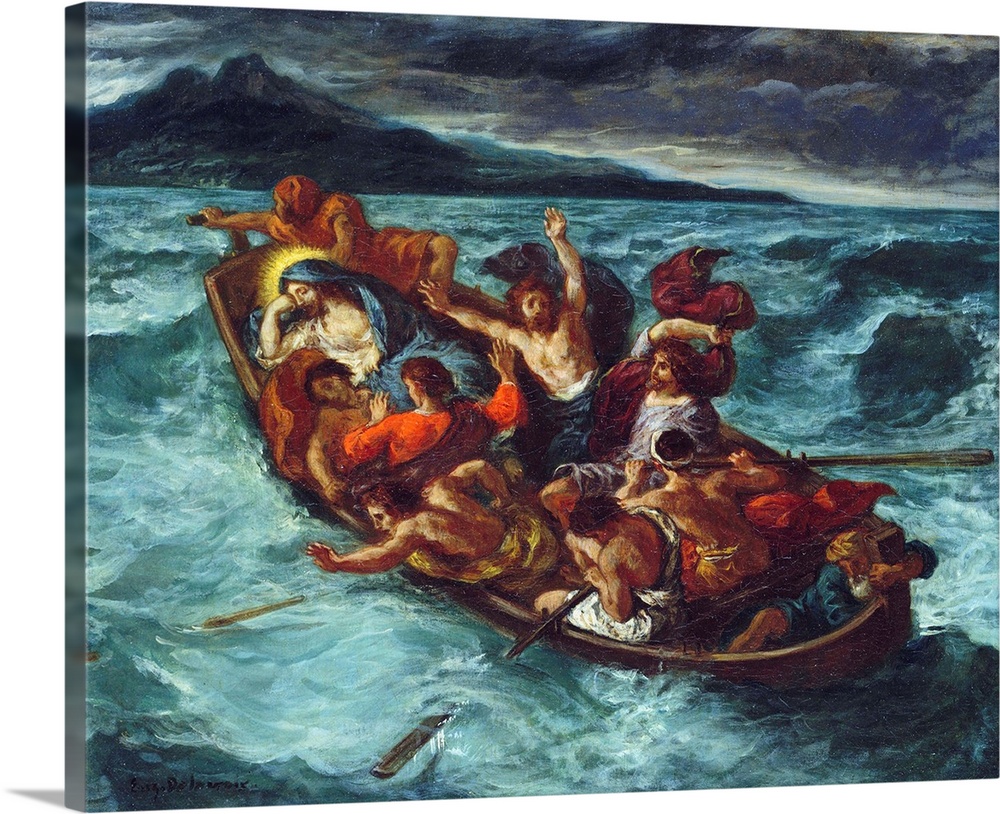
Now, in our Gospel today (Mk 4:35-41), the Apostles are afraid that they are going to die, and so they wake Jesus from his sleep. That’s right. While the apostles’ boat was being tossed around by the sea, Jesus was fast asleep. He must have been exhausted!

And what did Jesus say after he calmed the storm? He asked his disciples, “Why are you so afraid? Have you still no faith?”

At times, when we are afraid, we need to remind ourselves of Jesus’ words, “Why are you so afraid?” As long as God Father, Son or Holy Spirit are with us, we have no reason ever to be afraid. That is why we turn to the Church, the Sacraments, prayer and the Bible when we are afraid. They strengthen and comfort us, and we are sure that God hears and answers our prayers.

With that, let us pray. Heavenly Father, from whom all fatherhood in heaven and earth is named: Bless these and all children, and give their parents the spirit of wisdom and love, so that the homes in which they grow up may be to them an image of Your Kingdom, and the care of their parents a likeness of Your love. We pray in the Name of the Father and the Son and the Holy Spirit. Amen.

Thursday, June 20, 2024

Perish, Peace, Pistis


God’s grace, peace and mercy be with you. My sermon title is Perish, Peace, Pistis (Faith), and my focus is our Gospel (Mk 4:35-41). Let us pray. Heavenly Father, the psalmist wrote, I rejoiced when they said to me, ‘Let us go to the house of the Lord.’”  Now that our feet are within your gates, we rejoice to hear your Word. As we listen, may your Spirit enlighten our minds and move our hearts to love deeply as Jesus loved. This we pray to you, Most Holy Trinity. Amen.

The method of prayer I prefer employs the imagination. When I read a passage from Scripture, I place myself there. What do I see, hear, smell, taste and touch? What emotions do the people in the passage feel? Do I experience pain, joy, doubt, disbelief, forgiveness, hunger or satisfaction? When I read the passages of the feeding of the crowds, what do the people look like? How are they dressed? How do they smell? Is there a sense of desperation amidst the crowd? How do the disciples’ voices sound as this miracle unfolds before them? How do the bread and fish taste? How do the crowds and Jesus react?

When I read today’s passage from Mark, I used that method of prayer to create a sermon based on what I experienced in my prayer: perish, peace and pistis, the Greek word for faith. And because prayer demands action, a question: Now what?

First, perish. If you have not experienced a perfect storm, tornado, hurricane, earthquake, white out, tsunami, flood, blizzard, heat wave or avalanche, you may have been involved in a train crash, car crash, or felt the force of a linebacker colliding with your body. In an instant, you felt like you were not going to survive the moment. This is what I felt like on September 11, 2023, when a car T-boned me and demolished my car. Providentially, I was not hurt.

To perish means to suffer death, typically in a violent, sudden or untimely way. It also means to undergo complete ruin or destruction. Its origin is from two Latin words: per meaning through and ire meaning to go. To go through or perire eventually came to be known as pass away.

At a certain point in the passage, the disciples woke Jesus and asked, “Teacher, do you not care that we are perishing?” Prior to this, Jesus was teaching the crowds in parables from a boat anchored offshore. When he finished in the evening, he asked his disciples to cross to the other side. The eastern side of the Sea of Galilee, across from Capernaum, was a predominantly Gentile area. This voyage would be the first into Gentile territory. The disciples accompanied Jesus in several boats, leaving the crowd on the shore. They cast off with Jesus still seated in his floating pulpit without first going ashore.

The Sea of Galilee is known for violent storms that can arise without warning, as wind funnels through the steep valleys among the hills surrounding the lake. In this instance the storm was so fierce that it terrified even seasoned fishermen. Waves crashed over the boat, swamping it and threatening to sink it. Yet in the midst of this fury, Jesus was in the stern, asleep. Anyone who has ever been in a violently storm-tossed boat has reason to think that this ability to sleep through the storm was the first miracle! Jesus’ sleep exemplified perfect trust in God that is often signified in Scripture by a peaceful and untroubled sleep. We read in Job, “If you prepare your heart … you will feel secure, because there is hope; you will look around and take your rest in security. You will lie down, and none will make you afraid.” The Psalmist wrote, “In peace I will both lie down and sleep; for you alone, O Lord, make me dwell in safety.” Proverbs 3:24 reads, “If you lie down, you will not be afraid; when you lie down, your sleep will be sweet.”

Jesus’ serenity is not shared by his disciples, who woke him with a stinging reproach: “Teacher, do you not care that we are perishing?” This is the first time in Mark that Jesus was called Teacher, having just completed a day of teaching. This time, however, they would learn a powerful lesson of faith, learned by experience. The tone of the disciples’ question suggests that they had a vague idea that Jesus could do something about the storm, but they think he is indifferent to their plight, with no concern for survival. They are much like God’s people in Exodus. In chapter 14, we read, “When Pharaoh drew near, the people of Israel lifted up their eyes, and behold, the Egyptians were marching after them, and they feared greatly. And the people of Israel cried out to the Lord. They said to Moses, ‘Is it because there are no graves in Egypt that you have taken us away to die in the wilderness? What have you done to us in bringing us out of Egypt?’” On that day, at that very moment, God delivered his people to safety from peril, from death to life, and Jesus would deliver them too, not only from one side to the other, but in ways they could not fathom until He rose. So, as Jesus and his disciples cross to the other side, let me cross from my first point to my second, from perish to peace.

Peace is defined as a state of tranquility or freedom from disquieting or oppressive thoughts or emotions. It also means harmony in personal relations or mutual concord between governments. It also means to ask for silence or calm or as a greeting or farewell. The Greek word for peace and the Hebrew word, shalom, mean safety, welfare and prosperity.

Apparently, the disciples were not experiencing any sort of peace, but rather, panic. Jesus, however, did not leave his disciples in their panic. He immediately woke and rebuked the raging sea. He did not pray that God would calm the storm but commanded it himself with sovereign authority: Peace! Be still!

Rebuked is the same word used to describe his casting out unclean spirits. In chapter one, he rebuked the unclean spirit of the man who enter the synagogue in Capernaum. We read, “Jesus rebuked him, saying, ‘Be silent, and come out of him!’ And the unclean spirit, convulsing him and crying out with a loud voice, came out of him.’”

This suggests that demonic powers somehow instigated the squall that threatened to deflect him and his disciples from their mission. We know that in the Old Testament, the sea is often a symbol of chaos and the home of evil powers. Job stated, “By his power he stilled the sea.” The Psalmist wrote, “You divided the sea by your might; you broke the heads of the sea monsters on the waters. You crushed the heads of Leviathan; you gave him as food for the creatures of the wilderness.” And Isaiah prophesied, “In that day the Lord with his hard and great and strong sword will punish Leviathan the fleeing serpent, Leviathan the twisting serpent, and he will slay the dragon that is in the sea.” Jesus exorcised these forces of nature with the same authority that freed human beings from demonic possession. Instantly the howling wind subsided and the choppy waves became calm. The wording parallels Psalm 107: “They cried to the Lord in their trouble, and he delivered them from their distress. He made the storm be still, and the waves of the sea were hushed.”

Finally, pistis, faith. In Greek mythology, pistis was the personification of good faith, trust and reliability. In Christianity and in the New Testament, pistis is the word for faith. Pistis’ Roman equivalent was Fides, a personified concept significant in Roman culture.

The Latin word for faith means trust, confidence, reliance, credence or belief. In the early 14th-century it meant assent of the mind to the truth of a statement for which there is incomplete evidence, especially belief in religious matters. Faith is neither the submission of reason, nor is it the acceptance, simply and absolutely upon testimony, of what reason cannot reach. Faith is the ability to cleave to a power of goodness appealing to our higher and real self, not to our lower and apparent self.

Returning to our Gospel passage, at the moment the danger passed, Jesus chided his disciples for their feeble faith. “Why are you so afraid? Have you still no faith?” Certainly, they turned to him in their moment of terror and dismay; but they did not yet grasp who he really was: sovereign lord over all creation. Jesus was forming a band of followers who were to be confident in their mission on earth: to bring the peace and authority of the kingdom into al the troubles of humanity. He called them to complete a task on the other side of the sea: would he have done so only to let them perish in the waves?

 The disciples knew that God alone possessed power to subdue the seas. From Exodus on, God’s control of the sea signified his tender care for his people. Again, the Psalmist wrote, “O Lord God of hosts, who is mighty as you are, O Lord, with your faithfulness all around you? You rule the raging of the sea; when its waves rise, you still them.” It is no wonder that after Jesus calmed the storm, they were filled with great awe. Their terror of the forces of nature was replaced by reverent fear of the presence of God in Jesus. His subduing of the sea was a sign of his divine authority. “Who then is this?” is a question that not only Jesus’ contemporaries but all the readers of the Gospel are meant to ask. Echoing his question to the disciples: Who do you say that He is?

Well, there you have it. I made my three points, and ask, “Now, what?” Returning to my first point, perish, I searched the internet for the phrase, “I thought I was going to die.” I found these stories: a young woman who a dog attack in Los Angeles; a shopper who survived a shooting in an Ohio Kroger store; a resident of Temple, Texas who hid in the bathroom as a tornado destroyed her home; and a Portland, Oregon woman who survived the stabbing of her boyfriend.

Personally, I never survived an attack by a dog, a shooting, a tornado or a stabbing. However, when a tornado came through our area in Oklahoma, I thought “This is Armageddon!” I have suffered other ways: the death of my parents and my younger brother, friends and relatives. I suffered from job losses and bad investments. I lost teeth, broke bones, tore my meniscus and rotator cuff, which required surgery, and suffer from arthritis. Like you, I have lived to talk about it.

When we talk about our losses, most people understand and some gain insight. Life is short. Our bodies are fragile. Accidents happen. Senseless violence from man and beast occurs. Everyone dies. When storms strike, we are in the same boat thinking we are going to perish.

Still, survivors who tell their stories inspire hope into others because of what our Lord and Savior Jesus Christ, His Father and the Holy Spirit have done for us. Therefore, allow me to close with the story of one survivor.

Horatio Gates Spafford and his wife, Anna, were well known 19th century Chicagoans. As a prominent lawyer and a senior partner in a large and thriving law firm, he was also able to invest heavily in real estate in an expanding Chicago during the 1860s. He was an elder in the Presbyterian Church and a close friends of evangelist Dwight Moody.

In 1871, the Great Fire of Chicago reduced Spafford’s real estate investments to ashes and scarlet fever took the life of his son. In 1873, Spafford decided his family should take a holiday in England knowing that his friend Dwight Moody would be preaching there. He was delayed because of business, so he sent his family ahead: his wife and their four children, daughters eleven-year-old Annie, nine-year-old Maggie, five-year-old Elizabeth Bessie, and two-year-old Tanetta. On November 22, 1873, while crossing the Atlantic on the steamship Ville du Havre, their ship was struck by an iron sailing vessel and 226 people lost their lives, including all four of Spafford's daughters. Only his wife survived the tragedy. Upon arriving in England, she sent a telegram to Spafford beginning "Saved alone." Spafford then sailed to England, going over the location of his daughters' deaths. According to Bertha Spafford Vester, a daughter born after the tragedy, Spafford wrote “It Is Well with My Soul” on this journey. Spafford wrote these words in the second verse and the refrain.


Though Satan should buffet, though trials should come,

let this blest assurance control:

that Christ has regarded my helpless estate,

and has shed his own blood for my soul.

It is well with my soul;

it is well, it is well with my soul.


My friends, the Church today, like the boat bearing the disciples and the sleeping Jesus, is no different than the small, struggling early Church, storm-tossed on the seas of the vast Roman empire. They must have wondered why their Lord seemed to be asleep in the stern – absent, unaware, or unconcerned about the mortal perils that threatened them. Through the ages, how often did his disciples feel that way in the midst of storms of persecution, natural disasters or personal troubles? But Jesus’ authority is without limit, and though he allows trials, in the end nothing can truly harm those who trust in him. As He gave disciples the authority to tread on serpents and scorpions, and over all the power of the enemy, He promised them that nothing would hurt them.

His reproach of not to be afraid is an invitation for all Christians to awaken their faith in his presence and in his absolute authority over creation. The true antidote to fear of earthly dangers is the faith that comes from fear of the Lord. We read in Job, “Behold, the fear of the Lord, that is wisdom, and to turn away from evil is understanding” The most repeated command, do not fear, is an instruction not to succumb to the enemy’s strategy, which is to dismantle Jesus’ followers from their mission. When we have no fear, the enemy trembles in fear. At these times, repeat Spafford’s words, “It is well with my soul.” And when you do, may the peace of God that surpasses all understanding keep your hearts and minds in Christ Jesus. Amen.