Thursday, February 15, 2024

Lent and Temptations in Life


God’s grace, peace and mercy be with you. … My sermon is Lent, Temptation and Life and my focus is our Gospel (Mark 1:9-15). Let us pray. Heavenly Father, the psalmist wrote, “I rejoiced when they said to me, ‘Let us go to the house of the Lord.’” Now that our feet are within your gates, we rejoice to hear your Word. As we listen, may your Spirit enlighten our minds and move our hearts to love deeply as Jesus loved. This we pray to you, Most Holy Trinity. Amen.

Today, I examine Lent, Mark’s account of how Satan tempted Jesus throughout his life, and how this relates to us. Lent is a solemn religious observance that begins on Ash Wednesday and covers a period of approximately six weeks or 40 days before Easter Sunday.

In Latin, Lent is referred to by the term Quadragesima, meaning fortieth, referring to the fortieth day before Easter. In English, the word Lent initially meant spring, from the Germanic root for long, because in spring the days visibly lengthen.

The traditional purpose of Lent is the preparation of the believer through prayer, penance, and repentance of sins, almsgiving, atonement and self-denial. During Lent, our worship assumes a penitential character. The color for the season is purple, a color associated with penitence. By omitting the Hymn of Praise and Alleluia, we distinguish Lent from the rest of the year, and form a powerful contrast with the festive celebration of Jesus' resurrection when our alleluias ring loud and clear.

The Lutheran perspective of “giving up something for Lent” is a matter of Christian freedom. Our church has no law requiring members to “give up something,” since the Scriptures do not require this. If a Christian wants to give something up for Lent as a way of remembering and personalizing the sacrifice Christ made on the cross for our sins, then he is free to do so, as long as he does not judge others who opt not to do this.

The penitential character of Lent is not its sole purpose. In the ancient Church, the period leading up to Easter was a time of intense preparation for the candidates being baptized at the Easter Vigil on Holy Saturday. This time is appropriate for Baptism because of the relationship between Christ's death and resurrection and our own in the sacrament (Rom 6:1-11). This suggests that Lent serves as a time to meditate on the suffering that Christ endured on our behalf, and an opportunity to reflect our own Baptism and what it means to live as a child of God. I encourage you to read Be Gracious to Me, Portals of Prayer, LWML’s Mustard Seed devotions or the Lutheran Hour Ministries devotions.

We base our 40-day Lenten observance on Christ’s 40 days in the wilderness. In Mark we read, “He was in the wilderness forty days, being tempted by Satan.” (Mk 1:13) Though Mark’s account of Jesus’ temptation is brief, if we interpret it without referring to Matthew or Luke,[1] we taste Mark’s fuller flavor. We also see that Satan tempted Jesus throughout his life and even onto the cross.

Before his wilderness experience, John baptized Jesus. It may initially appear problematic that Jesus accepted John’s baptism. After all, it called for a change of heart in view of the forgiveness of sins. How could Jesus, who was not a sinner, have accepted such a baptism? I will save the answer for later.

As Jesus emerged from the baptismal waters, the heavens tore open and the Spirit descended on him like a dove. This is a response to Isaiah’s prayer that God “rend the heavens and come down” to bring his flock up from the sea, put his holy Spirit in the midst of his people and guide them in a new exodus (Isa 64:1).

At Jesus’ baptism, the rending of the heavens announced the beginning of the end; and as he breathed his last, the Temple’s sanctuary veil, decorated to look like the heavens, tore from top to bottom, symbolizing that in the end-time, the holy of holies and ancient sacrifices would be no more. The image of the dove, a symbol for Israel, revealed Jesus as the personal embodiment of a new Israel. As the Christ, the Anointed One, Jesus fulfilled Isaiah’s prayer.[2]

Immediately after Jesus’ baptism, the Spirit that descended on him drove him into the wilderness, where he was tested as Israel was tested in their exodus wilderness. This 40-day test evoked the days and nights Moses spent with God on the mountain as he received the Covenant (Ex 34:27-38), and called to mind Elijah’s 40-day walk to the mountain of God (1 Kgs 19:8).

Jesus’ 40 days represented his entire baptismal life, ending with his passion. Sent into the wilderness by the Spirit to lead people in a new exodus, Satan tested Jesus. Satan, the adversary of Jesus Christ, the Son of God, represented the power of evil. Satan was the obstacle Jesus had to overcome.

The setting for Jesus’ baptismal test was simple. Angels ministered to him while he was among wild beasts, symbolic of the world’s evil forces. The scene evoked numerous Old Testament passages, particularly the story of Daniel in the lion’s den (Dan 6:23), and the primal contest of creation where human beings dominated wild beasts (Gen 1:24-28). Mark also alluded to the Psalms (8:6-8) and Isaiah 13, where we read, “Desert creatures will lie there, jackals will fill her houses; there the owls will dwell, and there wild goats will leap about. Hyenas will inhabit her strongholds, jackals her luxurious palaces. Her time is at hand, and her days will not be prolonged.” (Isa 13:21-22)

As the one anointed by the Holy Spirit, Jesus’ life was an ongoing conflict with Satan, the spirit of evil. It began in the wilderness, but reappeared throughout the Gospel. In the Capernaum synagogue, a man with an unclean spirit engaged Jesus in a verbal skirmish.[3] Here, Mark showed the battle between the unclean spirit that possessed the man and the Holy Spirit that possessed Jesus. In another case, no one was strong enough to bind the Gerasene man possessed by a demonic spirit until Jesus appeared. And after Peter rebuked Jesus, because he could not imagine a Messiah who would suffer and die, Jesus, in turn rebuked Peter as Satan because he too acted as a stumbling block to the cross.[4]

The point is that throughout his life, Jesus battled Satan. Satan was and is a strong man (Mk 3:27). He effected demon-possession and physical maladies, created disorder in the natural world, and snatched up the Word of God sown on the path (Mk 4:1ff). He tempted people to abandon God’s will and inspired them to adopt hearts and minds set on human ways. His activity extended to Jesus’ enemies, the Lord’s followers and Jesus himself. Satan tested Jesus in the wilderness, in Gethsemane and on Golgotha.

Satan’s activity was implicit when Jesus asked God to “take this cup from me.” (Mk 14:36) And when Jesus exhorted his disciples to imitate him by watching and praying lest they enter into a test, the same language used in the wilderness account, this too confirmed the moment was Satan’s test.[5] Bound and hung on the cross, Jesus’ opponents declared he could not save himself – Satan’s final test to abandon God’s will.

Finally, upon his death, Jesus cried out in a loud voice that recalled the cries of those from whom he cast unclean spirits. As he died, the Holy Spirit that descended from a violently torn heaven and possessed Him at the start of the gospel, left His body as the Temple veil tore. The Spirit’s departure implied that it completed its work. Jesus’ death marked victory, not defeat, in His conflict with Satan.

At that moment, the centurion, upon seeing Jesus breathe his last, confirmed His divinity, just as our Heavenly Father declared Jesus to be his beloved Son. Now, instead of rising from the waters of baptism to declare the nearness of God’s Kingdom, his Resurrection from the tomb declared God’s victorious Kingdom.[6]

How does this relate to us? Lent is an appropriate time to remember our Baptism and its relationship to Christ's death and resurrection. It is also a fitting time to meditate on the suffering Christ endured on our behalf and what it means to live as a child of God.

Although Christ broke Satan’s power, God never promised a conflict-free world, but a world in which the risen Christ meets and restores errant followers so that they may imitate him in their struggles against satanic powers, and like him, endure to the end, empowered by the Holy Spirit.[7]

As we leave here, children of God filled with grace, love, mercy and the Holy Spirit, we enter a world of conflict, corruption and evil that both blinds and blind-sides us. Satan’s temptations are open and blatant, as well as secretive and surreptitious.

I may not be tempted to murder, but may be silently complicit over one million children aborted annually. I may not be tempted to break the Sixth Commandment, but may peruse inappropriate material. I may not steal from my neighbor, but may never open a generous hand to feed the poor. I may never swear false testimony in court, but may never speak kindly about others. I may never treat people as God treats me – with kindness, mercy and compassion – but may consider myself a good Christian. As a good Christian, the commandment most difficult to keep is the First: You shall have no other gods. Of this, Martin Luther wrote plainly.

“Many a one thinks that he has God and everything in abundance when he has money and possessions; he trusts in them and boasts of them with such firmness and assurance as to care for no one. Such a man also has a god, Mammon by name, that is, money and possessions, on which he sets all his heart, and which is also the most common idol on earth. He who has money and possessions feels secure, and is joyful and undismayed as though he were sitting in the midst of Paradise. On the other hand, he who has none doubts and is despondent, as though he knew of no God. For very few are to be found who are of good cheer, and who neither mourn nor complain if they have not Mammon. This care and desire for money sticks and clings to our nature, even to the grave.

So, too, whoever trusts and boasts that he possesses great skill, prudence, power, favor, friendship, and honor has also a god, but not this true and only God. This appears again when you notice how presumptuous, secure, and proud people are because of such possessions, and how despondent when they no longer exist or are withdrawn. Therefore, I repeat that the chief explanation of this point is that to have a god is to have something in which the heart entirely trusts.”[8] 

Each week I confess I am a miserable sinner addicted to my things and ways of doing things. As I said last week, I think highly of my bad ideas and overinflated opinions. I marry my feelings and divorce myself from others’ sensitivities. In short, I need to be saved.

The good news is, Christ saved me. Through no merit of my own, He saved me. He who conquered Satan, sin and death saved me from the tyranny of that trio. That brings me full-circle to my earlier question. “How could Jesus, who was not a sinner, have accepted such a baptism?”

John’s baptism of Jesus revealed His humanity and His solidarity with and commitment to sinners. What occurred when Jesus emerged from the water revealed His divinity and His solidarity with and commitment to God His Father.[9]

If I approach life’s challenges in individualistic terms (me against the world), the baptism of a sinless person is senseless because baptism has no meaning beyond the individual who is baptized. If, however, I view life’s challenges in interpersonal terms (we are all in this together), the baptism of a sinless person makes a lot of sense.[10]

Jesus did not have to be a sinner to accept John’s baptism. All he needed was to be in personal solidarity with men and women who are sinners in need of salvation. Jesus’ baptism by John presented him as a person in solidarity with all human beings, and it demonstrated his willingness to bear the weight of our sins on his sinless shoulders.[11]

Friends, as he tempted Jesus, Satan will tempt you until you exhaust your last gasp. You will be tempted to commit heinous sins and victimless crimes. If you rely upon yourself or any power but God to free yourself from his grip, you lose. Satan will bind you. Only Christ can free you … and the Good News is that He has!

Brothers and sisters, you will always have the Holy Spirit to guide you in the wilderness of life just as Jesus did, but as Paul exhorted the freed Christians of Rome, I beg you not to be addicted to yourself and your ways, your ideas and feelings. Forgiven fully by Christ, surrender to the Holy Spirit. Be a slave of the Holy Spirit, an addict of the Third Person of the Trinity and the means of God’s grace. When you are, the peace of God that surpasses all understanding will keep your hearts and minds in Christ Jesus.[12] Amen.


[1] Peter Edmonds, The Way Companion to the Sunday Missal. Oxford: Campion Hall (2014),  77.

[2] Eugene LaVerdiere, The Beginning of the Gospel: Introducing the Gospel According to Mark, Volume 1. Collegeville MN: The Liturgical Press (1999), 34.

[3] Elizabeth Shively, “Characterizing the Non-Human: Satan in the Gospel of Mark,” Character Studies and the Gospel of Mark. Edited by Christopher W. Skinner and Matthew Ryan Hauge. London: Bloomsbury (2014),  139ff.

[4] Shively, 144f

[5] Shively, 146

[6] Shively, 148

[7] Shively, 151.

[8] Book of Concord, Ten Commandments

[9] LaVerdiere, 34

[10] Ibid.

[11] Ibid.

[12] Philippians 4:7

Tuesday, February 13, 2024

Ash Wednesday


God’s grace, peace and mercy be with you. … My focus is the Gospel of Matthew and my theme is Day, Dust and Do. Let us pray. Heavenly Father, the psalmist wrote, “I rejoiced when they said to me, ‘Let us go to the house of the Lord.’” Now that our feet are within your gates, we rejoice to hear your Word. As we listen, may your Spirit enlighten our minds and move our hearts to love deeply as Jesus loved. This we pray to you, Most Holy Trinity. Amen.

Throughout the year, people observe events by wearing symbols. In December, you saw people wearing Christmas sweaters and ties. Next month, you might see a man wearing a shamrock on his lapel on St. Patrick’s Day. Today, if you saw a woman wearing a brooch in the form of a heart, you would say it is St. Valentine’s Day. It is, and it is also Ash Wednesday.

Surprisingly, people don gay apparel, shamrocks and hearts without knowing the reasons we wear those symbols. So it is with ashes upon our foreheads. Why do we ask pastors to smudge a cross above our brows on this day? Hence, Ash Wednesday’s significance, Ash Wednesday’s symbols and Ash Wednesday’s suggestions; or, Day, Dust and Do.

First, Day. The significance of Ash Wednesday is that it is one of the most solemn days of the church year. Forty-six days before Easter, this liturgy marks the beginning of a penitential discipline climaxing on Maundy Thursday. The mood is penitential and reflective. Worshipers keep reverent silence before the service and leave the service in silence. In some churches, there is no greeting at the door by the pastor.[1]

It used to be true that “liturgical churches” — those with a regular, calendar-based liturgy, or set of rituals and observances — marked the day, but nowadays, even Baptist and evangelical churches observe Ash Wednesday.[2]

According to Matthew, Mark and Luke, Jesus spent 40 days fasting in the desert, where he endured temptation by Satan. Lent originated from this, fasting 40 days as preparation for Easter. Every Sunday is a commemoration of the Sunday of Christ's Resurrection, and a feast day on which fasting is inappropriate. Accordingly, Christians fasted from Monday to Saturday (6 days) during 6 weeks and from Ash Wednesday to that Saturday (4 days), thus making up the number of 40 days.[3]

While there is no Biblical commandment to observe Ash Wednesday, it offers Christians the opportunity to acknowledge our frailty and sinfulness, and confess our imperfections. According to one Evangelical pastor, we can let down our pretenses and be truly honest with each other about who we are: that we all bear the mark of sin, from the youngest babies to the oldest seniors. We stand guilty before a holy God. As mortals, we will someday experience bodily death. Thus, we all need a Savior.[4]

We all need a Savior. And so, we move from significance to symbol, from day to dust. As I apply ashes to your forehead, I speak the words from Genesis, “Remember that you are dust, and to dust you shall return.”[5] Based on the words spoken to Adam and Eve after their sin, the formula reminds us of our sinfulness and mortality and of our need to repent. A newer formula, from Mark, “Repent and believe in the Gospel,”[6] makes explicit what was only implicit in the old, reinforcing the truth that we all need a Savior.

According to the ancient Jewish tradition of penance and fasting, the practice of wearing of ashes on the head symbolizes the dust from which God made us.[7] Ashes express grief. When Tamar was violated by her half-brother, "she sprinkled ashes on her head, tore her robe, and with her face buried in her hands went away crying."[8]

Ashes express sorrow for sins and faults. Job said to God, “I had heard of you by the hearing of the ear, but now my eye sees you; therefore I despise myself, and repent in dust and ashes.”[9] Jeremiah called for repentance by saying, “O daughter of my people, put on sackcloth, and roll in ashes; make mourning as for an only son, most bitter lamentation, for suddenly the destroyer will come upon us.”[10]We find similar mention on the lips of Jesus and elsewhere.[11] So, remember that you are dust.

As I was preparing for this day, I reflected on something I do daily throughout these months. I clean out the fireplace, and dispose of the ashes. It got me to thinking: Is there any value to ashes? If I add them to my garden, there is some benefit. If I sprinkle them to an icy sidewalk, that helps prevent a fall. Other than that, ashes have no value. Ashes equal dust.

Dust is nothing but common, ordinary dirt, taken for granted and trampled underfoot. One speck of dust looks like the rest. Disagree? You think you are unique? Think again. Billions of people never heard of you. Take a moment and consider that. Folks, you are dust.

Pretty grim, isn’t it? Only if you stop there; only if you stop with the symbol that is dust. But that symbol is incomplete. When I dust your forehead, I dust with another symbol: the sign of the cross. That symbol declares that dust has been redeemed. Redeemed not in the shadowy sense but with startling realism.

Ever since Bethlehem and Calvary, this speck of humanity that is you, is now “charged with the grandeur of God.” You are brothers and sisters of God-in-flesh. Your dust is literally electric with God’s own life. Your nothingness is filled with God’s eternity. Your nothingness has Christ’s own shape. You are dust redeemed. That brings me to my final point … do.

The roots of the verb “do” are Middle English and Germanic.[12] It means to bring to pass, to put or to perform or execute.[13]

I believe the best way to walk through Lent is to do what Jesus suggested, or better yet, commanded. Jesus is our Way and our Light. The only way to live with courage and conviction as Christians in the face of a world that is blessed and broken is to do what he commanded. Use the season of Lent to do what He commanded in today’s Gospel: pray, fast and give alms.

But let us do those things this Lent without anyone knowing, except God. And when you do, may the peace of God that surpasses all understanding keep your hearts and minds in Christ Jesus. Amen.


[1] Ash Wednesday Service. The Spirit Annointed Christ for Mercy – Lenten Worship Series. www.lcms.org

[2] http://www.huffingtonpost.com/2015/02/18/ash-wednesday-explainer_n_6705404.html

[3] https://en.wikipedia.org/wiki/Ash_Wednesday#cite_note-4

[4] http://www.patheos.com/blogs/markdroberts/series/ash-wednesday-practice-and-meaning/

[5] Genesis 3:19

[6] Mark 1:15

[7] http://www.catholic.org/clife/lent/ashwed.php

[8] 2 Samuel 3:19

[9] Job 42:3-6

[10] Jeremiah 6:26

[11] Matthew 11:21; Luke 10:13; Daniel 9:3; 1 Maccabees 3:47; 4:39; Numbers 19:9, 19:17, Jonah 3:6, Esther 4:1; Hebrews 9:13.

[12] http://www.etymonline.com/index.php?term=do

[13] http://www.merriam-webster.com/dictionary/do

Thursday, February 8, 2024

Transfiguration


God’s grace, peace and mercy be with you. … My sermon is based on our Gospel (Mark 9:2-9). Let us pray. Heavenly Father, the psalmist wrote, “I rejoiced when they said to me, ‘Let us go to the house of the Lord.’” Now that our feet are within your gates, we rejoice to hear your Word. As we listen, may your Spirit enlighten our minds and move our hearts to love deeply as Jesus loved. This we pray to you, Most Holy Trinity. Amen.

Generically speaking the word, transfiguration, means a change in form or appearance. It also means an exalting, glorifying or spiritual change. Harry Potter diehards define transfiguration as a core subject taught at Hogwarts, the art and science of changing an object’s form and appearance. That is not what we understand and observe today.

I want you to understand why we observe Transfiguration today, that is, why the church places it on the Sunday immediately prior to Ash Wednesday, why Mark placed it in chapter 9, and what practical application the Transfiguration plays in our lives.

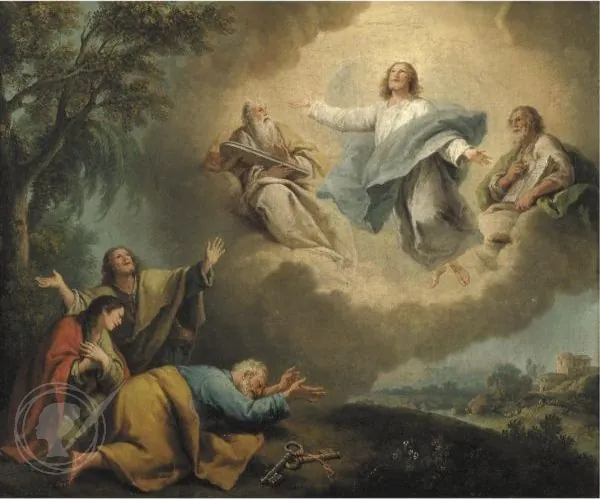
The church places the Transfiguration on the Sunday immediately prior to Ash Wednesday. As a Christian feast, the Transfiguration commemorates Christ’s transfiguration or metamorphosis on a mountaintop in the presence of three disciples. It makes a great deal of sense to observe it today, because when we look at the church’s liturgical year beginning with Advent, we see the Sundays after Epiphany framed by the Baptism of Jesus and the Transfiguration. On these Sundays, God the Father proclaims, “You are my Beloved Son” and “This is my Beloved Son.”

The whole Season of Epiphany is about revealing who Jesus is, and emphasizes that He is God’s Son. We hear this at the beginning of his ministry and as Jesus travels to Jerusalem, which happens right after the Transfiguration. After this Sunday, the church observes Ash Wednesday, which plunges us down into the valley of Lent, which precedes Easter.

In the Transfiguration we get a glimpse of the glory of God. That glory is fully revealed in the Resurrection of our Lord. And although the Transfiguration is not a prequel to the Resurrection, on this day, we look over the valley of Lent to Easter. Imagine that you are looking from one mountaintop to another, knowing that there is a deep valley between the place where you stand and the next peak. Today, we say good-bye to Alleluia and anticipate its return at Easter. This is how our feast fits into our liturgical year.

Mark placed the Transfiguration in chapter 9. When we expand the text of our Gospel and look at chapter 8, the account is depressing. After Jesus’ multiplication miracle, the Pharisees demanded a sign, Jesus restored sight to a blind man, and Peter confessed him the Christ. Jesus predicted his passion, death and resurrection, and after Peter and Jesus exchanged rebukes, the Lord stated the cost of discipleship: deny yourself, take up your cross and follow me. As a striking counterbalance, the Transfiguration reveals heavenly glory vis-à-vis the humiliation in 8:31, where Jesus said, “that the Son of Man must suffer many things, be rejected by the elders, chief priests and scribes and be killed, and after three days rise again.”

 Chapter 9 begins with Jesus saying, “Truly, I say to you, there are some standing here who will not taste death until they see the kingdom of God after it has come with power.” In this verse, Jesus meant the Resurrection, which all standing there, with the exception of Judas, witnessed on Easter. Mark closed the Transfiguration passage with, “As they were coming down the mountain, he charged them to tell no one what they had seen, until the Son of Man had risen from the dead.” In other words, although the Easter Resurrection is not the sequel to the Transfiguration, the Paschal Mystery – Christ’s suffering, death and resurrection – frames today’s passage and allows us to read it in its proper context.

If we expand the passage to include the whole Bible, we see that the Old Testament clearly underlies Mark’s Transfiguration account. Now remember, our most reliable lens for understanding the Old Testament is through the teaching of Jesus and the writings of the New Testament. Who among us can say that I or someone else knows the Scriptures better than these? So, Mark opens the account by telling us that Jesus took Peter, James and John – the disciples who witnessed Jesus’ agony at Gethsemane – up a high mountain. Moses took Aaron, Nadab, and Abihu up Mount Sinai to meet God. From the outset, Jesus’ ascent triggered thoughts of a new Sinai experience.

As it was for Moses and Elijah, the mountain was a special place in Mark for prayer, contemplation, apostolic commissioning, and, as shown in the Transfiguration, extraordinary revelation. Elsewhere in Mark, we read, “After he took leave of them, he went up on the mountain to pray.” In chapter three, Jesus “went up on the mountain and called to him those whom he desired, and they came to him.”

As I explained earlier, transfiguration means a glorifying or spiritual change. There are several Old Testament references regarding this change. In Exodus, after Moses met God, his skin glowed. Later, the Psalmist wrote of God, “You are clothed with splendor and majesty, covering yourself with light as with a garment.” And Daniel described God’s clothing as white as snow. So, we see the glorifying or spiritual change when man meets God.

In their transfiguration accounts, Matthew described the change in Jesus’ face, and Luke Jesus’ face and clothing. Mark described only His clothes as “radiant, intensely white, as no one on earth could bleach them.” Mark’s point was the disciples could not account for what they witnessed, but identified Jesus through his clothing. This way of identifying Jesus prepared them for the message from the voice in the cloud.

Next, two Old Testament figures appear. Verse 4 states, “there appeared to them Elijah with Moses.”  All the Evangelists used the word ‘appeared.’  Luke used the same word to describe the what occurred after the two disciples returned from Emmaus. He wrote, “The Lord has risen indeed, and has appeared to Simon!” Likewise, Paul used the word when he wrote of the Resurrection to the Corinthians. Christ “appeared to Cephas, then to the twelve. Then he appeared to more than five hundred brothers at one time … He appeared to James, then to all the apostles. Last of all … he appeared also to me.” The word ‘appear’ conveyed the presence of God in Jesus, the Second Person of the Trinity.

Onto the Old Testament figures. Unlike Matthew and Luke, Mark reversed the order when he wrote that Elijah and Moses appeared to the disciples. We quickly think they represented the Prophets and the Law, but the text begs us to dig deeper.

Note that Mark mentioned Elijah twice already – immediately prior to John the Baptist’s death and Peter’s confession. In the minds of Jews during Jesus’ time, Elijah’s appearance meant that the time of fulfillment was near.

While Moses represented the Law, he lifted eschatological – or end-time hopes – as Israel awaited the Messiah. Two Sundays ago, we heard Moses say, “The Lord your God will raise up for you a prophet like me from among you, from your brothers—it is to him you shall listen.”

Therefore, in the minds of Jewish people, the appearance of Elijah and Moses fulfilled every hope, for the glorious end-time had now begun with the coming of Jesus. To the righteous, such an appearance brought delight, but to the sinful, scorn. As with Jesus, people rejected Elijah and Moses. The Hebrew people constantly grumbled against God and Moses; and Elijah was an exemplary model for suffering at the hands of the ungodly.

Responding to the unfolding action of the Transfiguration, Peter proposed what he thought a brilliant idea. Actually, his proposal was a clumsy way for a practical man to express what to do at such a time. Given that God declared and commanded, “This is my beloved Son; listen to him,” Peter’s proposal to put Elijah and Moses on par with Jesus is even more out of place. Mark reminded readers how inappropriate Peter’s idea really was, but first, the cloud.

In between Peter’s suggestion and God’s command came the cloud, a theophanic motif, or a sophisticated way of saying how God showed himself. In Exodus we read, “The Lord went before them by day in a pillar of cloud to lead them along the way.” And later, “When Moses entered the tent, the pillar of cloud would descend and stand at the entrance of the tent, and the Lord would speak with Moses. When the people saw the pillar of cloud standing at the entrance of the tent, all the people would rise up and worship, each at his tent door.”

Transfiguration’s cloud on the mountain and the voice of God that spoke from it echoed what occurred to God’s people in the Sinai. In short, as God spoke there, God spoke here.

The Transfiguration remained the disciples’ private event until after the Resurrection. It encouraged them to persevere. Before the Transfiguration, the disciples could only focus on Jesus Crucified; after it, they could focus on Jesus Resurrected. Biblically and liturgically, we look over the valley of Lent and see the Risen Lord on Easter Sunday.

Having examined why the church places the Transfiguration on the Sunday immediately prior to Ash Wednesday, and why Mark placed it in chapter 9, we now examine what practical application the Transfiguration plays in our lives.

Returning to Peter’s proposal, we see it was inappropriate. Tents were dwellings of the world to come. Peter wanted the vision to last and to withdraw Jesus from this earth. Fortunately, the voice commanded Peter to “listen to him,” a message Peter did not like.

“Listen to him,” is a message we, like Peter, dislike and disregard. To listen to Jesus requires intimacy. To listen requires intimacy, but after 37 years of counseling couples preparing for marriage, counseling couples enriching their marriage, and counseling couples dissolving their marriage, the complaint underlying all faults is, “You’re not listening.”

Now, if the person with whom you are most intimate informs you that you are not listening, how often does our Heavenly Father say it? I know He tells me multiple times throughout the day. I am sure He reminds you too.

First, let us presume that God wants us to listen to Him. Evidently, He does, for early in Mark, Jesus summoned disciples, created The Twelve and called them into fellowship with him. We read, “He went up on the mountain and called to him those whom he desired, and they came to him. He appointed twelve (whom he also named apostles) so that they might be with him and he might send them out to preach and have authority to cast out demons.”

That they might be with him was the first duty of the apostle. Before preaching or casting out demons, they were to be with or in fellowship with Jesus. This is part and parcel of the portrait of the fully human Jesus. He needed a support group. He longed for fellowship. He lived as a person in community, not as an isolated prophet. These were not merely Jesus’ pupils, but his friends and coworkers. He appointed them for fellowship and to witness.

Jesus calls you into fellowship with Him. He calls you to be with Him. The Father calls you to listen to Him. The time we call fellowship over coffee and cookies pales in comparison to what we are doing right now. Fellowship is listening to God speak to us and receiving Christ’s Body and Blood to nourish our souls. Fellowship elsewhere is simply talking to one another about mundane stuff.

Now, friends, throughout each day, how much time do you fellowship with or listen to Jesus? To put that into perspective, let me read a snippet of A Man’s Guide to Spiritual Disciplines. 

“A young businessman told me, ‘I really don't have a lot of time for prayer and Bible reading. I have young kids, I'm building my career, and I'm very active in my church.’

When I was in that same mindset, I took a suggestion from management guru Peter Drucker. I sat down with a piece of paper and charted how I actually spent my time. Drucker says everyone has expectations about what their chart will say, and without exception, everyone is surprised by what they actually find. I discovered that I spent one to two hours every night watching television. … I started going to bed early instead of watching TV, and getting up two hours earlier in the morning. People sometimes think I'm crazy to get up at 4 a.m., but that's okay. I'm in conversation with God.

Martin Luther is famous for commenting, ‘I have so much to do today that I'm going to need to spend three hours in prayer in order to be able to get it all done.’ We must learn to see prayer as the most powerful and efficient use of our time.

If you want a close relationship with Jesus, you can have it, but you must cultivate that relationship through conversation.”

If you want a close relationship or fellowship with Jesus, you can have it, but you must cultivate that relationship through conversation. Cultivating that relationship first means that we have the right understanding of fellowship. Fellowship with Jesus is being here with the community of believers listening to God’s Word and receiving Christ’s true Body and Blood. During our Divine Worship, we have a conversation with God primarily by listening to God and accepting Christ’s Body and Blood in, with and under the form of bread and wine. Here, we pray. Here we have a conversation with God. Here we listen.

Now, responding to the unfolding action of the Transfiguration, Peter proposed what he thought a brilliant idea. Actually, his proposal was a clumsy way for a practical man to express what to do at such a time. A selfish, sinful or worldly way for a good man.

When we scrutinize many of the brilliant ideas we propose, we see that they are actually clumsy, selfish, sinful or worldly. While this observation makes me squirm with remorse, regret or revenge, I know it is true. Like Peter, I do not listen to Him because I do not take time to listen to Him. I am too busy for prayer and Bible reading. I have young children. I'm building my career and my friendships. I have lots of social activities that keep me busy. And so on.

Question: Do I make choices based on listening to Jesus or to a sinful world and my sinful self? Are the choices I let my children make based on the teachings of our church or the values of our culture?

Friends, your presence here, listening to me, tells me you want a close relationship with Jesus. You want to fellowship with Him. You can have that relationship, but you must cultivate it through prayer. Listen to him as he prepares to take his disciples to the mountaintop.

“Calling the crowd to him with his disciples, he said, ‘If anyone would come after me, let him deny himself and take up his cross and follow me. For whoever would save his life will lose it, but whoever loses his life for my sake and the gospel’s will save it. For what does it profit a man to gain the whole world and forfeit his soul? For what can a man give in return for his soul?’”

From here, the mountaintop of Transfiguration, I can see our Risen Lord on Easter morning and when we gather in fellowship with Him. Today, His Word washes away my sinful inclinations and thoughtless ideas; enriches my choices and relationships. His Body and Blood nourish me for the journey through Lent’s valley and life’s trials. His Spirit enlightens my mind and moves my heart to love deeply as Jesus loved.

Between now and Ash Wednesday, chart how you spend your time. Throughout Lent, instead of watching TV or reading social media, turn in early and spend that amount of time in conversation with God each morning. If you want a close relationship with God, you can have it, but like the people Jesus called into fellowship, you must cultivate that relationship through prayer and conversation. When you do, may the peace of God that surpasses all understanding keep your heart your hearts and minds in Christ Jesus. Amen.


Saturday, February 3, 2024

RUN!


Do you like to run? When I was younger, I used to love running. As an adult I ran for exercise. I could easily run for 5 miles. Then, one day I decided I would run a marathon.

Do you know how far you have to run to finish a marathon? It would be like running from Mount Olive Church to the Pittsburgh Airport! Do you think you could run that far?

Well, before any of you were born, I ran a marathon in Oklahoma. I enjoyed it so much that I ran two in one day: my first and my last marathons.

When you run a marathon or any race, you stay on a course. Sometimes you run through neighborhoods and parks. Sometimes you run in a straight line or an oval track. You do not run aimlessly.

Paul tells us in our second reading (1 Cor 9:16-27) that he did not run aimlessly. Paul was not a runner or a boxer, but he liked to use athletics to explain God’s grace and our salvation through Christ.

Because Paul wanted to win people to Jesus, he worked really hard because he knew how much Jesus loved him and all people. Because Paul loved Jesus so much, he would do anything for Him in order to win people to God.

You may enjoy running or boxing, science or music, video games or outdoor games, and as a Christian, you can win people for Jesus. Do you know how?

You love them. You love God with all your heart, mind and soul, and you love your neighbor as much as you love yourself. So, no matter what activity you do, you can always love God and neighbor while you are running or playing.

With that, let us pray. Heavenly Father, from whom all fatherhood in heaven and earth is named: Bless all children, and give their fathers and mothers the spirit of wisdom and love, so that the homes in which they grow up may be to them an image of Your Kingdom, and the care of their parents a likeness of Your love. We pray in the Name of the Father and the Son and the Holy Spirit. Amen.