Wednesday, August 13, 2025

Distress, Division, Discipleship (Luke 12:49-53)


God’s grace, peace and mercy be with you. My sermon today is entitled Distress, Division, Discipleship, and my focus is our Gospel (Luke 12:49-53). Let us pray. Heavenly Father, the psalmist wrote, “I rejoiced when they said to me, ‘Let us go to the house of the Lord.’” Now that our feet are standing within your gates, we rejoice to hear your Word. As we listen, may your Spirit enlighten our minds and move our hearts to love deeply as Jesus loved. This we pray to you, Most Holy Trinity. Amen.

If pain or suffering affects my body or mind, I am distressed. If I am in a state of danger or desperate need, I am distressed. If I am a ship without power or taking on water, I am distressed. It’s sad news if my business or administration is distressed, but good news if my furniture or jeans are distressed.

The word distress means a circumstance that causes anxiety or hardship. It comes to us from the Latin word distringere meaning to draw apart, compel or coerce. Dis means lack of, opposite of or apart, and stringere means to draw tight or press together.

In our Gospel today, Jesus is greatly distressed. Other translations state that Jesus was afflicted, burdened, constrained, consumed, pressed and pent up. Why? Jesus opens his message by telling his disciples that he came to cast fire upon the earth. In itself, this is not unusual. Fire is mentioned over 600 times in the Old Testament. We all know the danger and destruction fire brings, but I never associated fire with distress, as Jesus does in our Gospel. Fire destroys and purifies, and the fire of God’s wrath laid on Jesus led to his death and destroyed the power of sin and hell. Jesus first received this wrath when he entered the water of baptism by John in the Jordan River. He continued to stand under that wrath until it was satisfied in his crucifixion. So, Jesus knew that he was to bear this fiery wrath and end-time judgment, and his distress expressed his desire for it to be accomplished.

In my study of the Prophet Isaiah (chapter 49), he wrote about the Servant being distressed and seeing nothing coming out of his own effort, and so he turned from his own wisdom and rested in the God who called and appointed him. The Servant was faithful, but distressed, and Isaiah reminds us that resting faith is the answer to despondency. The antidote to distress is to rest in God’s promise, and to allow the Father’s work to be done. The Father’s work, as well as that of the Son, was completed when Jesus was upon the Cross. Jesus, on his way to Jerusalem (see 9:51), knew the outcome of his journey’s end and the horror that awaited him in Jerusalem. He was to be the holocaust or the whole burnt offering – offered up for the sin of the world. So, until that moment arrived, Jesus would be distressed.

Next, division. Most of us learned division in third grade. We memorized flash cards and completed homework assignments. We know that division is the act of separating into parts, portions or shares. Military branches and multinational corporations have separate divisions. Communities have subdivisions, and our homes are divided into rooms. When we divide, we force apart or separate. We sever the union or connection. Our nation was once officially divided (Civil War) and remained unofficially divided over numerous issues.

Was Jesus’ intention to force apart families? Was he trying to get people to choose sides? Was he attempting to segregate believers from unbelievers? In this passage, Jesus moved from distress to speaking about the divisive effect of his suffering and death, which would be the kindling of the end-time fire and baptism that lead to his coming in judgment. Furthermore, the divisive impact of his presence in the world would continue through the ministry of his apostles after his death, resurrection and ascension.

In speaking about the fire Jesus came to cast and the baptism with which he had to be baptized is about his destiny in Jerusalem. This baptism brings division, and it seems ironic because he was supposed to bring peace. That is what Zechariah prophesied in chapter one. “In the tender compassion of our God the dawn from on high shall break upon us, to shine on those who dwell in darkness and the shadow of death, and to guide our feet into the way of peace.” Throughout his ministry Jesus did bring peace to sinners and sick people. He commanded the disciples to announce peace as they went off in pairs. When he entered Jerusalem, the crowds sang his blessings and of peace in heaven and glory in the highest! Even his first words after he rose from the dead offered peace to his disciples. So, how do we reconcile all these passages of peace with the division his baptism would bring?

Peace between God and man is made possible because of the fiery wrath placed on Jesus crucified. And yet, his baptism into death would cause division and conflict among people. The theology of the cross brings peace with God and absolves those marked with the cross in Baptism, but that mark also brings antagonism and animosity from the world.

We read of this division clearly in Micah (7:6). Jesus repeated this division in chapter 14, “If anyone comes to me and does not hate his own father and mother and wife and children and brothers and sisters, yes, and even his own life, he cannot be my disciple.”[1] Later, he spoke these words, “You will be delivered up even by parents and brothers and relatives and friends, and some of you they will put to death. You will be hated by all for my name’s sake.”[2]

The division between the disciples of Jesus and those who do not accept his baptism occurs immediately after his ascension and continues today. Yet, we do not stand alone. We do not walk alone. We are in this together because of Christ crucified, because of Christ’s baptism into death and everlasting life. And that brings me to my third point, discipleship.

I have examined this word in previous sermons, and if you are listening to (or reading) this sermon, you are a disciple of Jesus Christ. You became a disciple of Christ, a Christian, when you were baptized, for that was the moment when you received God the Father’s Word for you spoken through Jesus and His Church by the grace of the Holy Spirit. Through Christ’s Paschal Mystery – His suffering, dying, death, descent into hell, and resurrection – 2000 years ago, you were saved. At whatever moment in your life that you were baptized, you received God’s Word – his promise of salvation – which is your participation in that same Paschal Mystery. So, while you have faith in Christ, which saves, your baptism is your formal declaration to accept that promise.

Citing Christ’s commands about baptism in Matthew 28:19 and Mark 16:16, in which He instructs the Eleven Apostles to baptize and teaches that whoever believes and is baptized will be saved, Luther’s Small Catechism states that Baptism effects forgiveness of sins, rescues from death and the devil, and gives eternal salvation to all who believe this, as the words and promises of God declare.

The Catechism goes on to teach that the Old Adam in us should by daily contrition and repentance be drowned and die with all sins and evil desires, and that a new person should daily emerge and arise to live before God in righteousness and purity forever. For Christians of the first five centuries, this would have been most important. They needed to guard themselves against falling into the worship of Satan, which included all kinds of idolatrous and superstitious practices. The worship of the devil was found everywhere. People were deceived by dreams of demons. They plunged themselves into pools thinking the water would bring healing from their diseases. They believed in signs, astrology and predictions, wore amulets and practiced magic.

People of the first centuries desiring baptism went through rigorous training. They prepared for it by attending daily teaching from the bishop. They were assigned a personal sponsor who showed them how to live in the world as a Christian. They publicly denounced Satan and all practices related to him and professed the Creed until they memorized it. They stripped off the “old man” like a soiled garment robe and put on the new tunic Christ offered them. Only then were they ready for baptism itself. Only then were they ready to call themselves Christian.

We find in the earliest teaching of Christian baptism the destruction of the old and the creation of the new person which was achieved by Christ’s death and resurrection. So, one who was baptized was not only purified from sins and received the grace of adoption but also became an antitype of the Passion of Christ. Symbolically, the baptized person was no longer the old Adam, but his counterpart – Christ. In short, to be a Christian in the ancient Church, you had to go through hell symbolically as Christ did. You had to die with Christ to live with Him.

I mention all of this because to be a disciple during the time of the Apostles and the early Church, you not only separated yourself from Satan, sin and the ways of the world, but your own family. Embracing Christ through baptism meant rejecting the ways of the world and your own identity. Remember that only recently have people in this culture been able to identify themselves. Traditionally, your family was your identity. Your native ethnicity was your identity. Society identified most people, but Christians broke free of that and identified themselves as Christ in the world realizing full well that identification with Christ could result in the same death, but also the same Life He lives.

So, what does all this talk about how disciples experienced baptism in the early Church have to do with you and me? I was musing recently that becoming a Christian should not be as easy as attending a meeting or getting a membership card to Costco, Sam’s Club or any other preferred shopping outlet. So, what does it mean to belong to Christ and not just a club?

Being a disciple of Christ today should be no less challenging than it was for people during the Church’s first centuries. Those Christians went through hell. Christ went through hell. We should be willing to do the same.

We don’t have to go to work in the Church in Ukraine or any other war-torn country. We have enough strife here. We don’t need to separate ourselves from family but question and choose practices and values that better resemble Christ in the world. Think of St. Monica’s influence on her son, Augustine. Not all of us are called to sell everything, give to the poor and follow Jesus in poverty, but as Christians we may want to re-evaluate how we spend our money and time. We may want to begin by following Martin Luther’s practice of remembering our own baptism daily so that the Old Adam die with all sins and evil desires, and the new you emerge and live before God in righteousness and purity.

With that, I close with a prayer that is printed in the bulletin and projected on our screen. I am asking you to recite with me Martin Luther’s Remembrance of Baptism.

Lord God, heavenly Father, we give you thanks for the wonderful gift of baptism and the many gifts that come with it: forgiveness of sins, the Holy Spirit, and eternal life through your Son Jesus Christ. In your grace and mercy, preserve us in faith that we may never doubt your promise, but find our comfort in you in all temptations. Send us your Holy Spirit that we may renounce sin and always continue in the righteousness given us in baptism, until we receive eternal salvation by your grace.

My friends, may the peace of God that surpasses all understanding keep your hearts and minds in Christ Jesus. Amen.


[1] Luke 14:26.

[2] Luke 21:16-17.

Tuesday, August 12, 2025

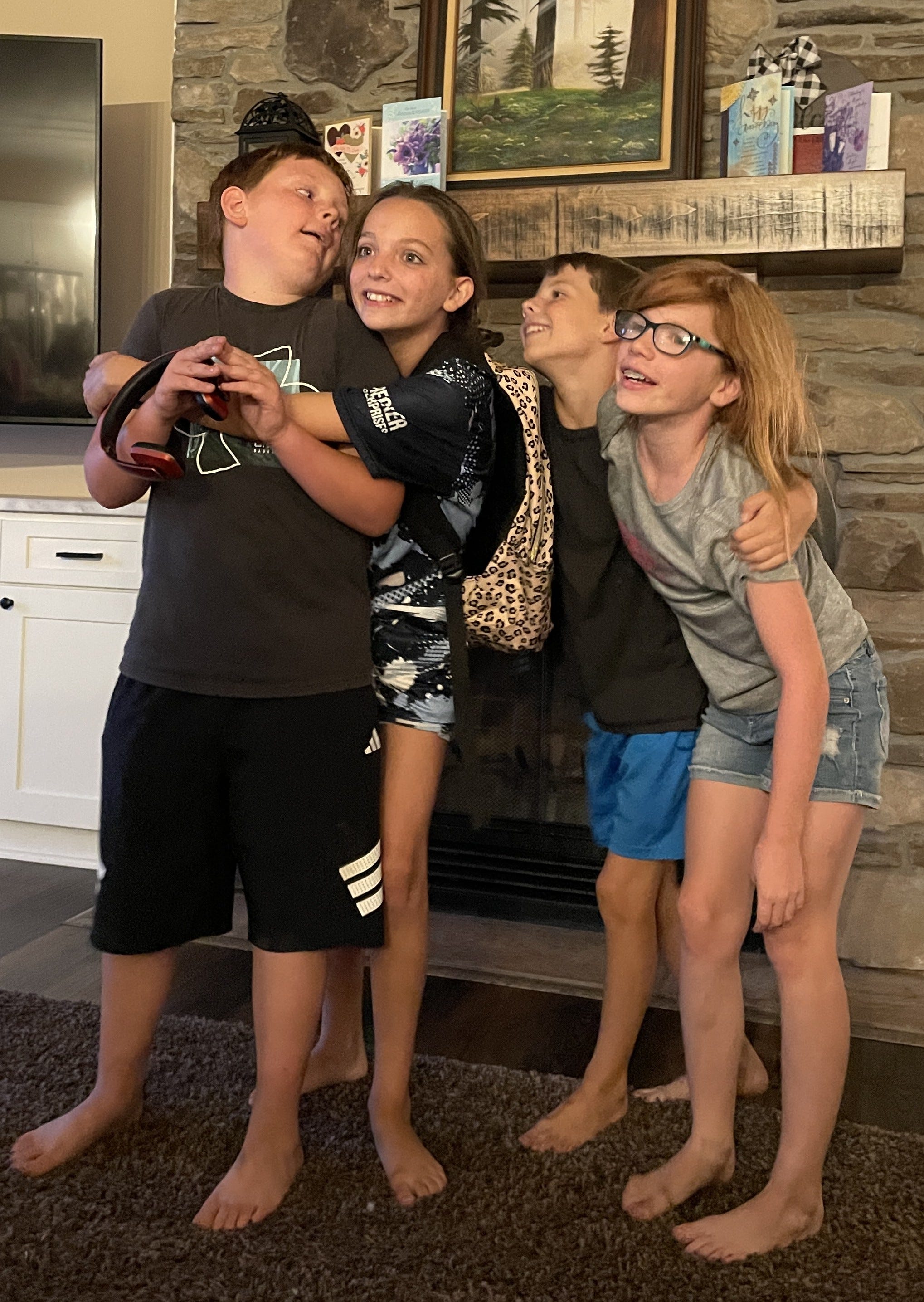
Grandchildren Week


The past week was filled with joyful family activities as our four grandchildren gathered at our home. We enjoyed baseball games, picnics, worship, outdoor games, gardening, cooking, and local attractions. Memorable moments included playful sibling rivalries, horseback riding, first-time mowing and tractor driving, swimming, and minor league baseball. The visit was a heartwarming blend of tradition, learning, and fun, creating lasting memories for all.

A group of kids hugging

AI-generated content may be incorrect.

(L-R: Levi, Emma, Henry, Kinley)

Hosting

Every summer since 2020, our home in Pennsylvania becomes a sanctuary of laughter, learning, and legacy. During the first two years, all four of our grandchildren lived in Indiana or Illinois. Currently, two of them live nearby and two in Wisconsin.

Our grandchildren from Wisconsin – Levi and Kinley – stayed with us this past week. It was a wonderful experience for us. We planned fun learning activities and family time with Cindy and me, as well as their cousins – Emma and Henry.

Arrival

Their visit started off with a delayed flight on Friday evening, and with Cindy, they finally hit the sack at 2:00 AM last Saturday. Other than that, the week was marvelous. Their first day started watching Henry play a baseball game, followed by the Annual Potter Township Picnic complete with free sandwiches, fries, ice cream and fireworks that rival the display in the City of Pittsburgh.

Fireworks in the sky

AI-generated content may be incorrect.


Worship and Games

Sunday included worship and then playtime with cousins at our home. This brought back memories of my brothers and me playing outdoors with cousins, aunts and uncles. Back then, we played softball, tag, hide ‘n seek, and wiffle ball. Our grandchildren played all those games and argued about who makes the rules for each. It reminded me that children have not changed much in sixty years.

Gardening Lessons

In between the games and before dinner, we got them to pick beans, peppers, cucumbers and tomatoes. They set an informal contest of who could pick the largest green bean. Yet, an intervention of adult guidance was needed to offset their enthusiasm when digging potatoes and carrots. They got so excited when they saw and pulled on the stem of the carrot, they kept breaking the crown from the taproot. I needed to loosen the soil with a spade before giving them permission to harvest. The harvested root vegetables are in storage, and on Monday, my grandson and I made salsa and pickles.

Fort Steuben and Family Memories

Fort Steuben is a local attraction we frequent when we host visitors. It’s a pleasant forty-minute drive from our home to Dean Martin’s hometown of Steubenville, Ohio. Transporting Levi, Kinley and Henry made me think of how my parents separated us in our 1955 Chevy Belair. My older brother, John, and I sat in the back seat, and my younger brother, Ed, sat between my parents in the front seat.

A blue and white car parked on gravel

AI-generated content may be incorrect.

(My parents owned a 1955 Chevrolet Belair.)

Because sibling children do not always conduct themselves perfectly while riding in the back seat of a car no matter how long or short the trip is, we encouraged them to bring their iPads. Take my advice, do this. You’ll maintain your sanity and you will prevent someone from getting poked in the eye.

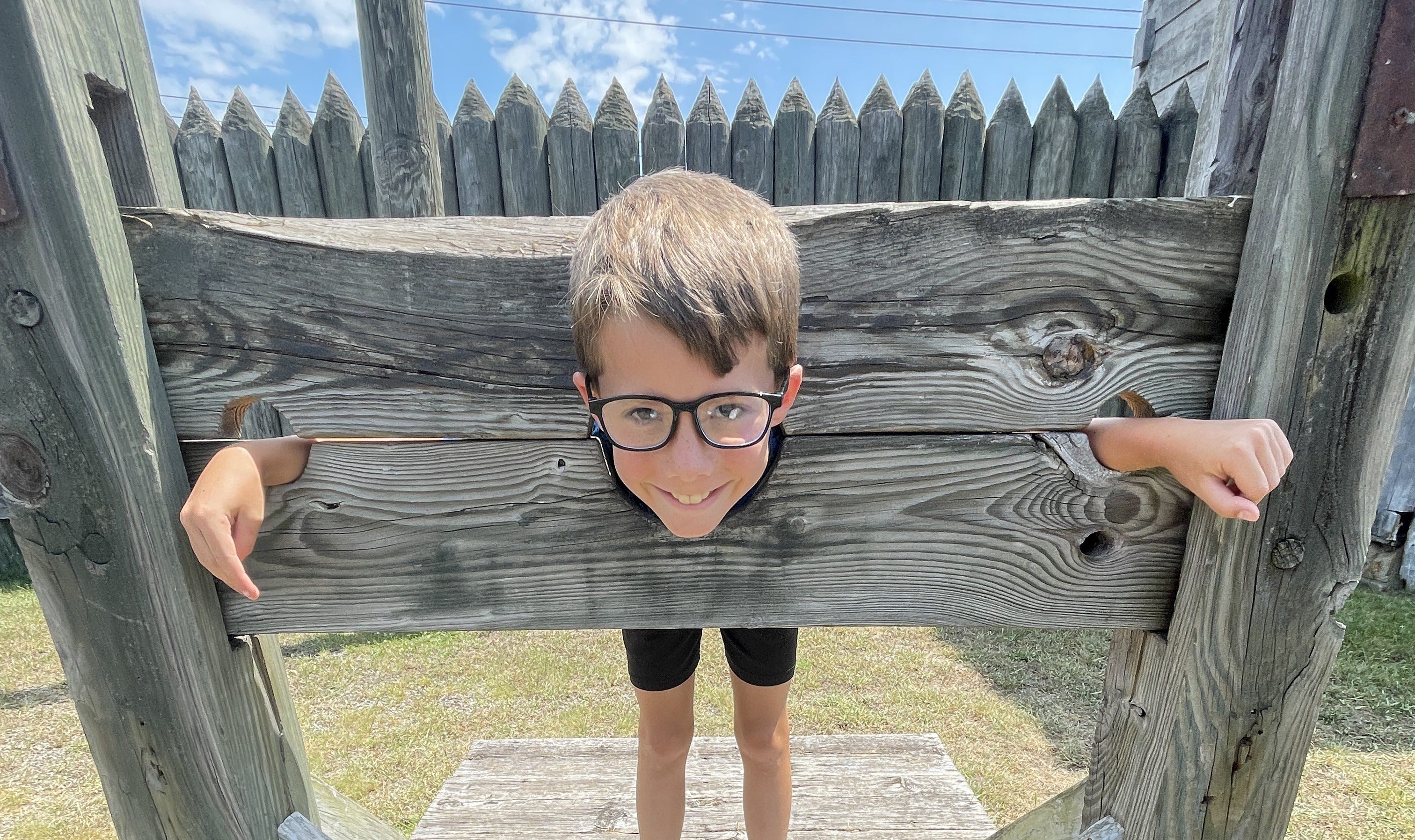
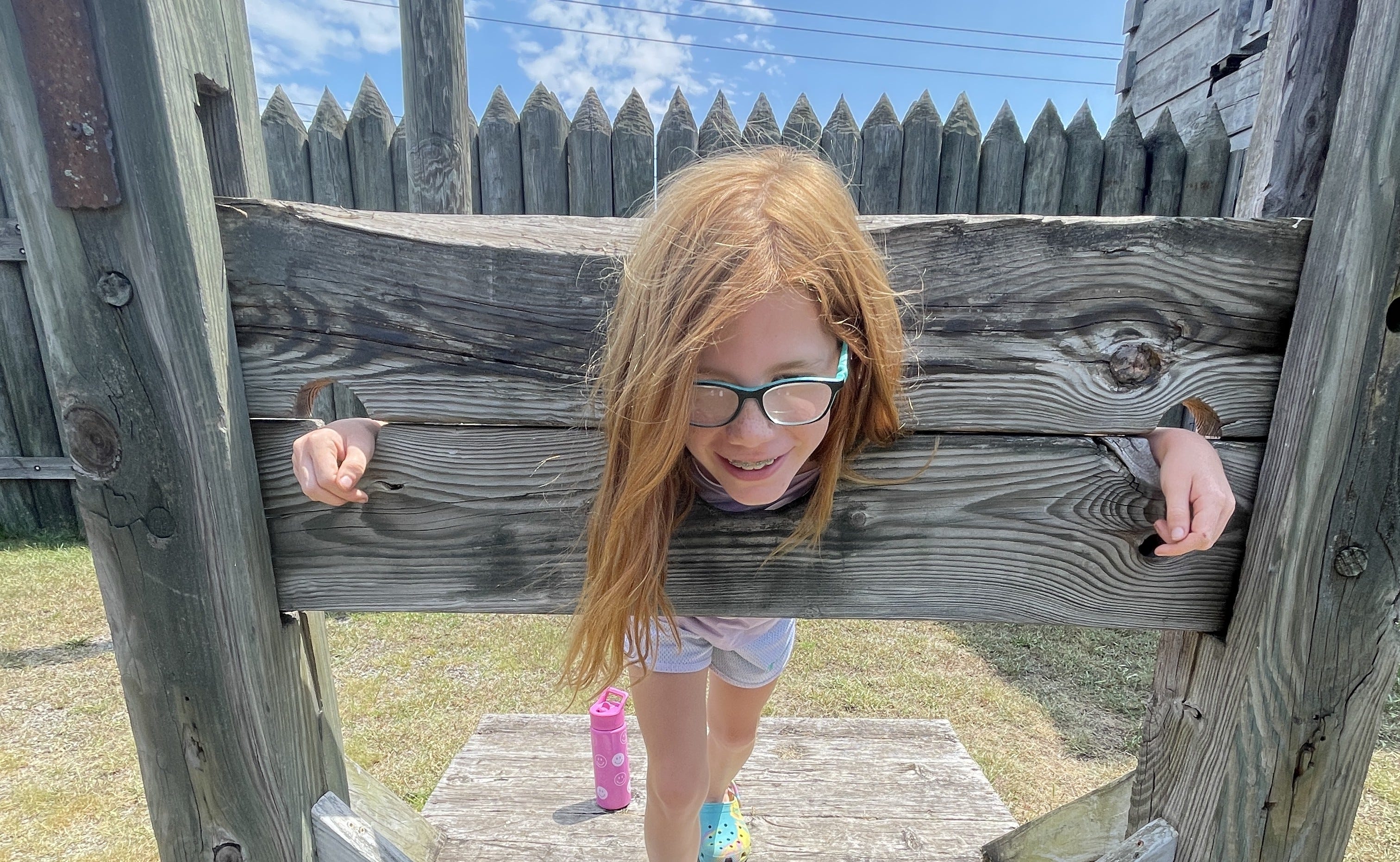
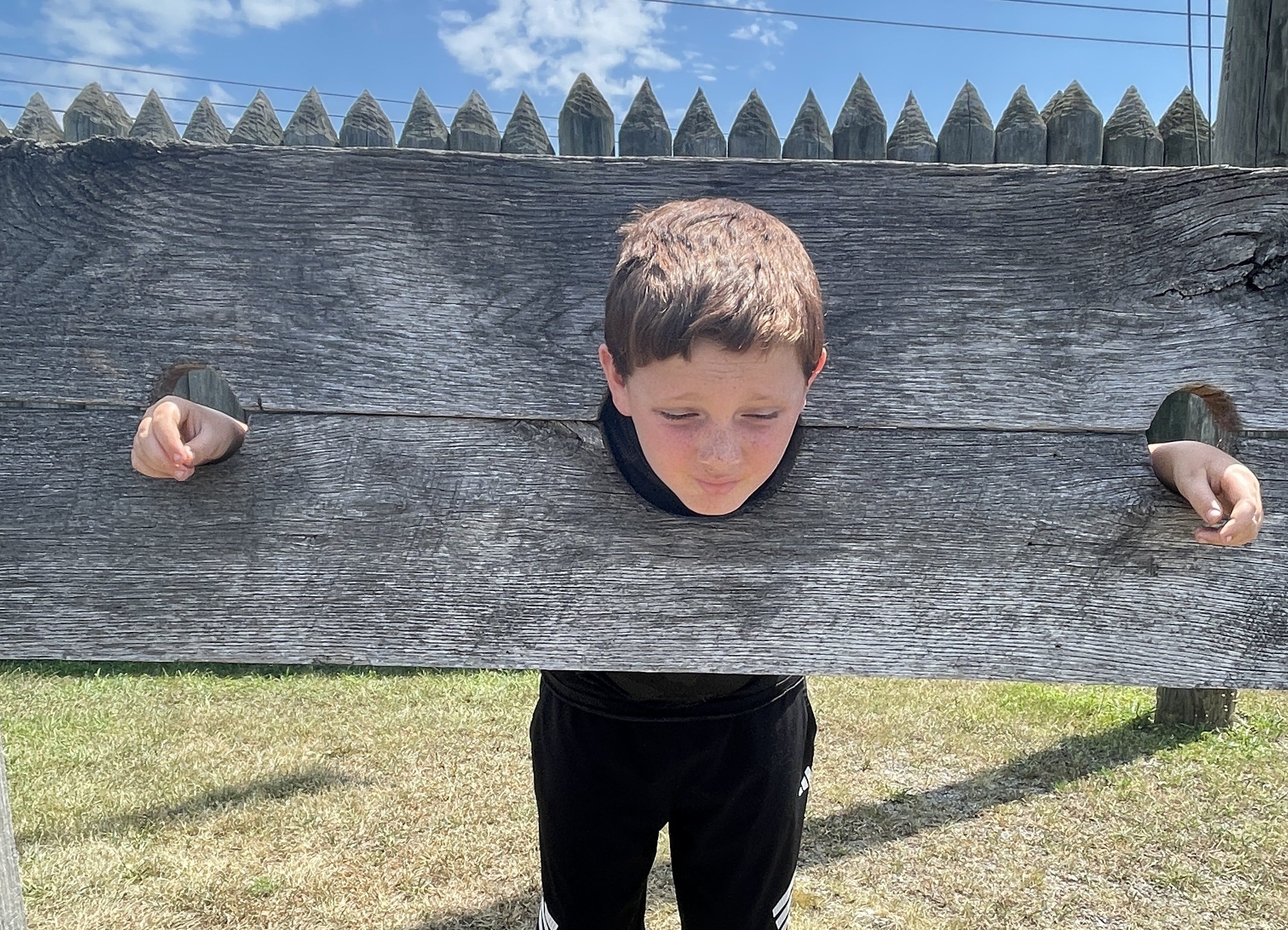
I thought Fort Steuben would be a wonderful educational experience for these three, but the two eight-year-olds overcame their boredom by zipping in and out of each exhibit as quickly as possible, whereas Levi loved examining the tools, weapons and pelts displayed in each building. The highlight for each was serving a short sentence in the stockade. Upon returning home, the three of them took time to help pick more vegetables, collect eggs and play with the chickens.

A child with glasses and a face on a wood board

AI-generated content may be incorrect.


A child looking through a wooden fence

AI-generated content may be incorrect.


A child holding a wood board

AI-generated content may be incorrect.


Riding Lessons and Mowing

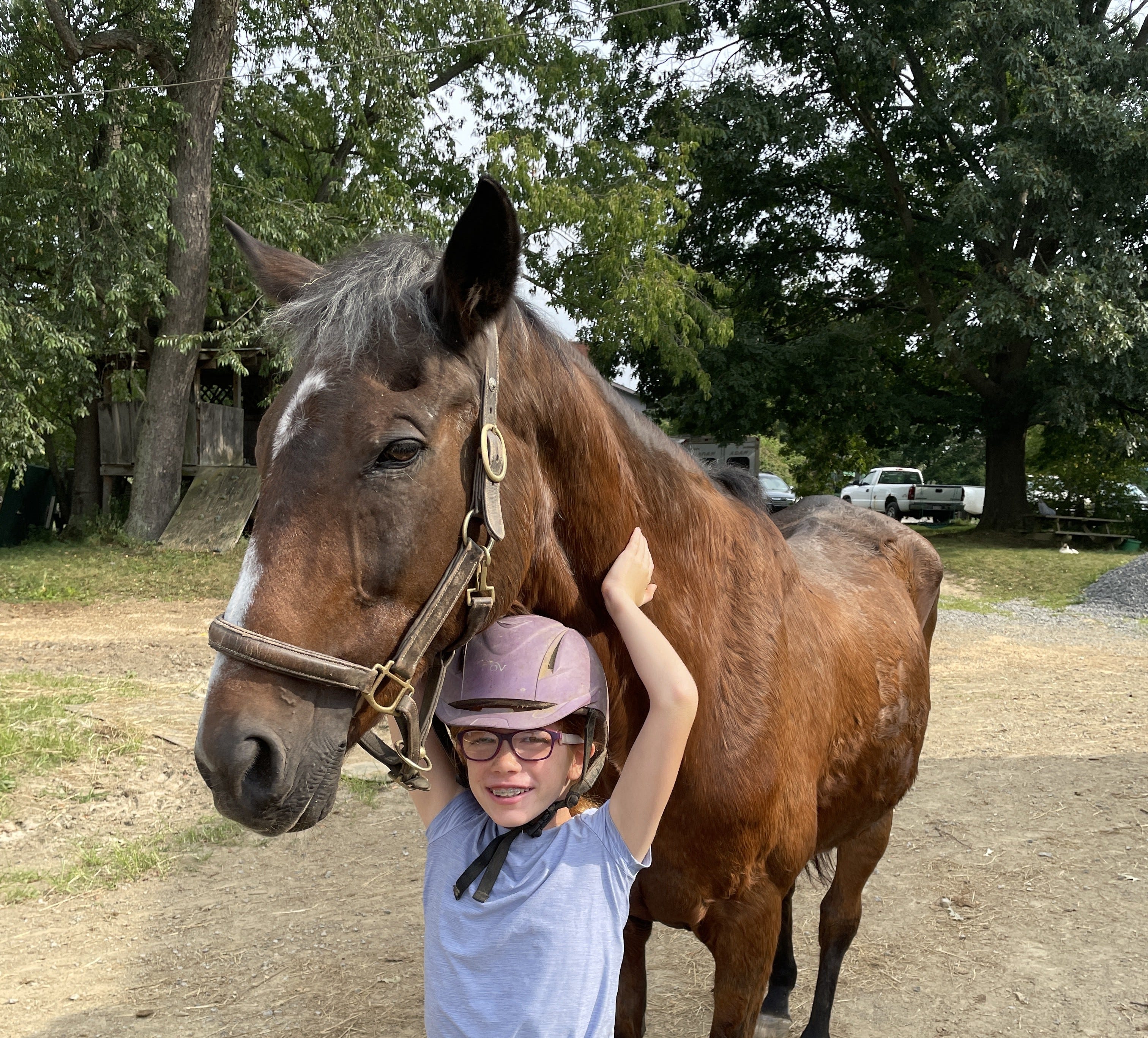
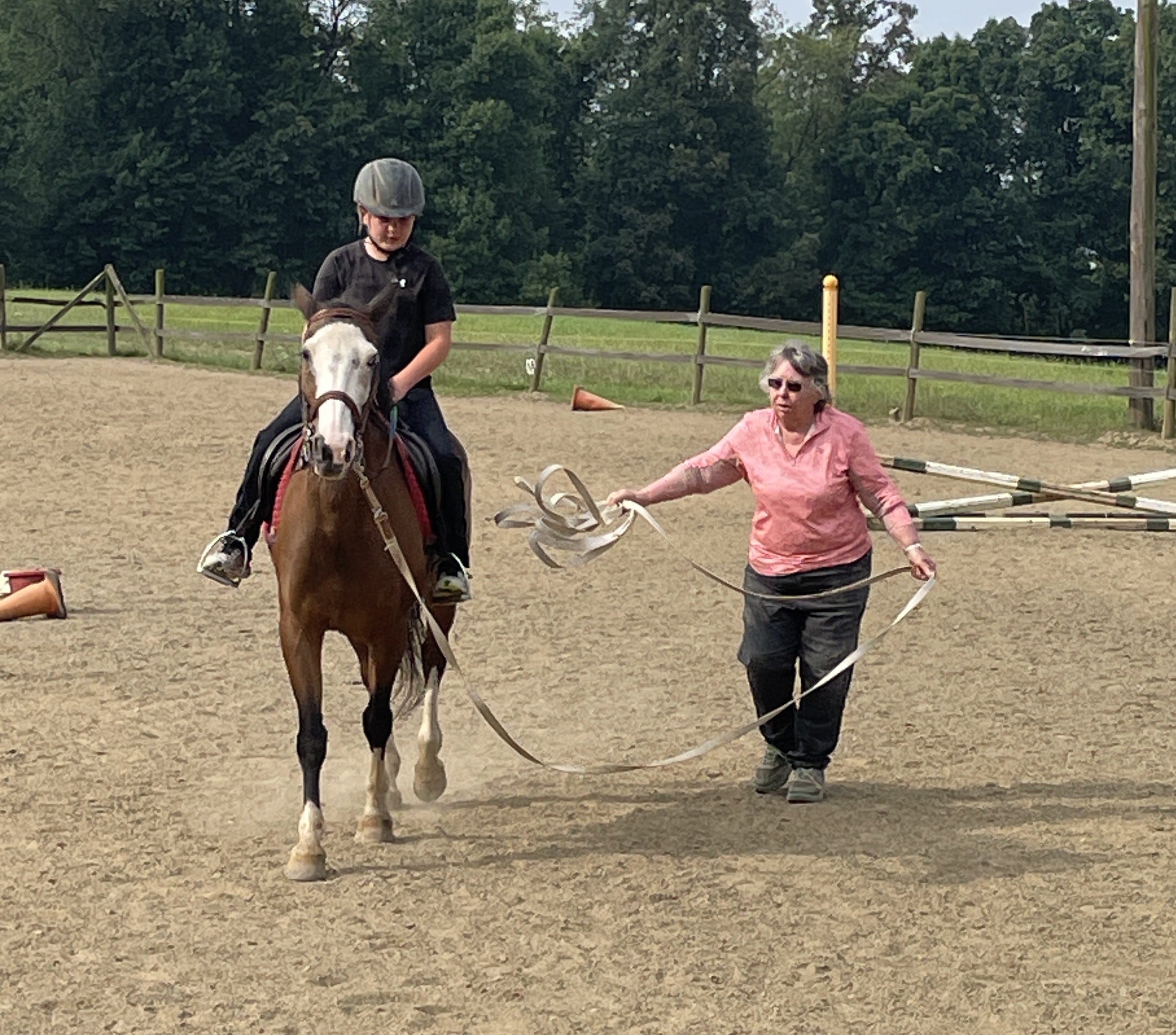
Our friends, Beverly and David Patrick, live nearby on a horse farm. Beverly grew up around horses, and still competitively drives a team of Fell ponies. We got to know them through our community college classes on wine tasting. Bev enjoys teaching people how to ride a horse or a pony, and on Wednesday, she offered a refresher class to Levi and Kinley, and this year added a surprise – a trip on her carriage.

A child standing next to a horse

AI-generated content may be incorrect.


A person and a horse

AI-generated content may be incorrect.

(Beverly teaches Levi how to ride.)

When we returned home, I got Levi to mow our back field on our John Deere riding lawn mower. It was his first time mowing, and not only did he do a respectable job, but he also enjoyed mowing, except for the bumps. Both Levi and Kinley got a chance to drive my Kubota tractor, but because she is so light, Kinley needed me and then her mom to sit on the tractor with her while she drove like a crazy lady.

Baseball, Bracelets and a Bonfire

On Thursday, everyone went swimming at a local pool. and then Levi and Kinley went to the airport with Grammy to pick up their mom. On Friday, we all attended a Washington Wild Things baseball game. Minor league baseball games are child-friendly and family affordable. In between these activities, Levi assisted me in cutting, splitting and stacking firewood, and picking more vegetables.

A group of kids posing for a picture

AI-generated content may be incorrect.

(Wild Things!)

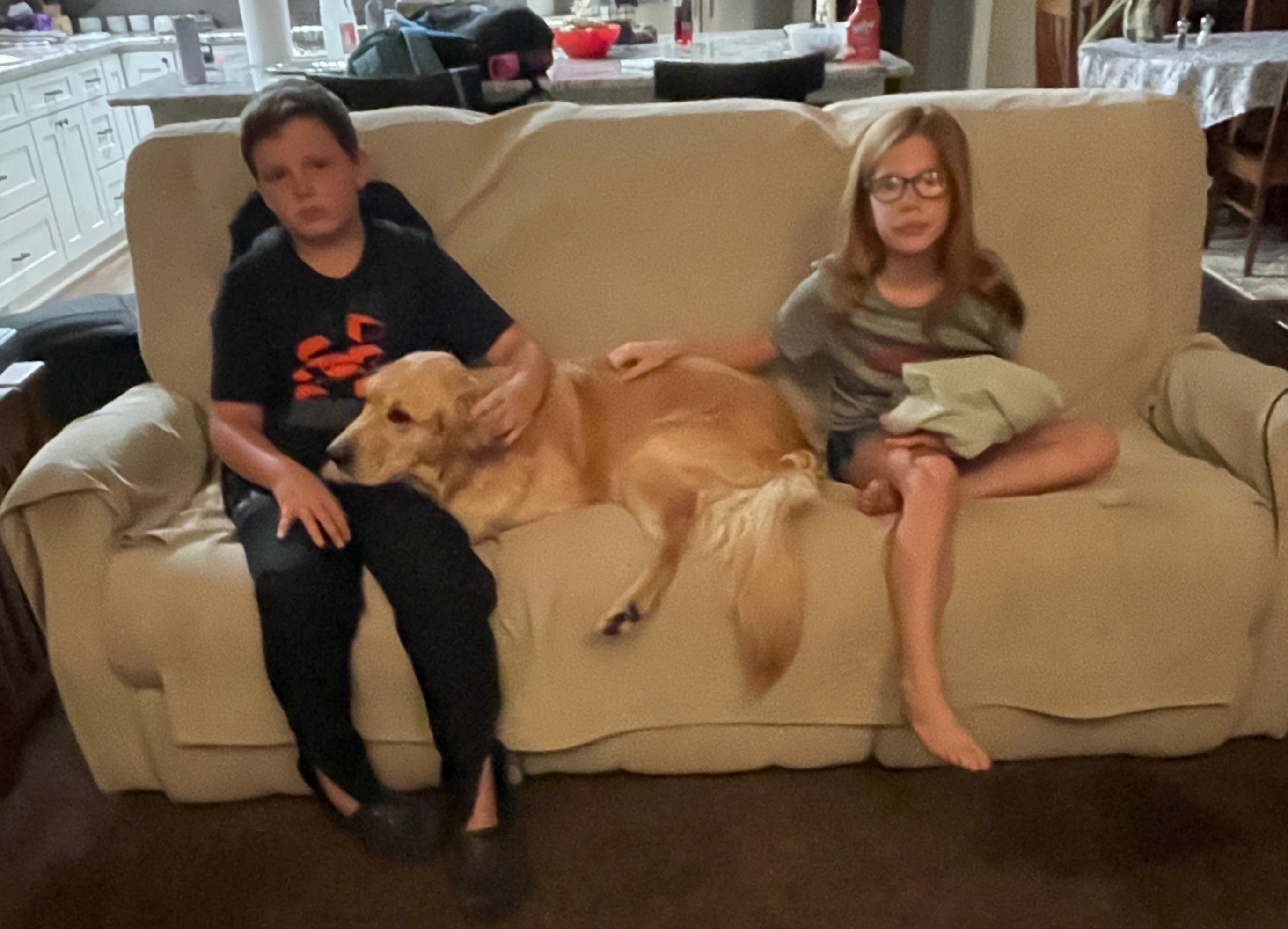
Saturday was the last day. Our oldest grandchild, Emma, organized a business venture with her brother and cousins – selling lemonade and her homemade bracelets at the front of our property. Friends, neighbors and others stopped and supported them. One guy even bought half of Emma’s bracelets. After two hours, they made a profit and divided their shares. We then enjoyed a wonderful roast beef dinner with sides of home-grown potatoes, carrots, turnips and green beans before completing the evening outside where everyone enjoyed the bonfire, smores and watching the boys exhaust our Golden Retriever, Maggie, as she chased a ball Levi and Henry hit across the backyard. This morning, Cindy took them to the airport, and they were home before lunch.

A child and child sitting on a couch with a dog

AI-generated content may be incorrect.

(Levi and Kinley share a last moment with an exhausted Maggie.)

In the moments between bean-picking contests and bonfire smores, I’m reminded of Psalm 127:3: “Behold, children are a heritage from the Lord, the fruit of the womb a reward.” We thoroughly enjoyed hosting our grandchildren this week and getting all of them to spend time together. It is one of the joys of being grandparents.

Tuesday, July 29, 2025

Called by Grace, Sent to Serve


                                       Called by Grace, Sent to Serve

Reflecting upon Pastor Joel Lissy’s ordination on July 13, I started thinking about the two tracks we took to become pastors in the Lutheran Church – Missouri Synod (LCMS). To do this, I write this essay to guide you through my process of becoming a Pastor in the Synod. If I gave my reflection a title it would be: Called by Grace, Sent to Serve in three acts: Act One (Vocational Foundations), Act Two (The Turning Point), and Act Three (The Colloquy and Call).


Act One: Vocational Foundations

Pastor Lissy is blessed to serve two congregations at such a youthful age. He is a bright and talented man who was raised in the Lutheran Church and has a shepherd’s heart. took the more common track. After high school, he graduated from college with a bachelor’s degree, and eventually a master’s degree.[1] On the other hand, after graduating from Center Area High School in 1975, I attended Penn State for a year, then attended a technical school program where I studied HVAC, which landed me a job at Babcock and Wilcox. I worked at Babcock & Wilcox for four years while also working several second part-time jobs and taking night courses at Community College of Beaver County.

During this time, I realized that my Call was from God. In the Lutheran Church, we use the term “Divine Call.” The Call to serve God is Divine and is distinct from the Call a congregation offers a man to serve as its Pastor. Even in high school, I knew I was called to serve God, but I could not articulate it at the time.

In 1979, four years after graduating from high school, I started my studies on my path to the priesthood at St. Mary’s College in Orchard Lake, MI, where I obtained a Bachelor of Arts in Philosophy. Following that, I was assigned to study at Christ the King Seminary in East Aurora, NY, where I obtained a Master of Divinity degree. Those were required for ordination to the priesthood. I served congregations in and around Pittsburgh for seven years.

Seven years after I was ordained, Father Frank Drabiska, the Pastor of Word of God Parish in Swissvale, where I served as his assistant, encouraged me to further my education at Duquesne University where I obtained a Master of Science in Education in 2003, and subsequently a Master of Public Policy and Management for Nonprofit Management from the University of Pittsburgh in 2004. During the latter study, I began to explore other options outside of pastoral ministry.

During this time (1998-2004), I was serving as the Pastor of St. Irenaeus Parish in Oakmont. For years, the parish was stagnant. Without addressing everything, let me highlight a few successes we implemented: a Capital Campaign to eliminate the debt and improve the campus, an increased enrollment in the school which was expanded to include Seventh and Eighth Grades. We also added a number of spiritual programs and sharing groups to serve the members’ needs.

Toward the end of my pastorate, I asked the Bishop of Pittsburgh for a sabbatical to complete my degree at the University of Pittsburgh, to volunteer as a staff member at Jubilee Kitchen in Pittsburgh’s Hill District, and to make a thirty-day retreat. My request was denied, and I was assigned to serve at another parish. After a period of prayer and reflection, I chose to take a leave of absence and worked as a Development Director and Program Manager for Jubilee Kitchen in the Hill District.

Being a pastor in any denomination is not a profession; it is a Divine Call. As a priest, I was handling sacred things; reading and preaching about God’s Word; guiding people to Christ through the sacraments and in prayer. As a Development Director, my job was to raise money. As a Program Manager, my job was to guide people to success and report on that to our funders. To this day, I am still correcting people who say that being a priest or a pastor is just like any other job. It’s not a job; it’s a Divine Call.

I worked at Jubilee Kitchen for two years. In addition to serving as its Development Director, I also started a program for women incarcerated at the Allegheny County Jail. These incarcerated women were mothers of young children. My work there was eye-opening. Many people do not see the women I served as I did. They were flawed sinners, but they were also created in God’s image. I treated them with the dignity they deserved.

For instance, once I was asked to take boxes of canned food from the Jubilee pantry to a client living in a sparse apartment on the Northside. After delivering several boxes of food and paper products, I left. The woman called me within five minutes and said, “Paul, I don’t own a can opener.” I bought one and delivered it to her.

Although the work was demanding and enriching, I knew that I wanted to return to the priestly ministry, but not to the Diocese of Pittsburgh. I worked with the diocesan officials in the clergy office and was eventually accepted as a priest into the Diocese of Santa Rosa, CA.

Returning to ministry in the Summer of 2005, I served as the Parochial Vicar at St. Bernard in Eureka. I loved everything about Eureka. The church and rectory were six blocks from the bay, meaning that if there was a tsunami, we would be safe. The church was beautiful. It was constructed of native redwood trees over a hundred years ago. The rectory was well preserved in its historical setting. I settled in to begin a prosperous ministry. Then, news came.

My mother was diagnosed with multiple myeloma and amyloidosis. This diagnosis is a death sentence. That year, Christmas fell on a Sunday. Pastor Loren Allen of St. Bernard’s told me that he would be able to handle the services alone and encouraged me to spend a week with family in Beaver County. During that time, I spoke with my friend, Dr. William Katz, about my mother’s diagnosis. He told me that she had between two months and two years. I asked, “What do you think I should do?” He replied, “I don’t know what you will do, but I would return home and take care of her.”

At the beginning of February 2006, I returned home to care for my mother. I did not expect this period of my life to be so strenuous. If you lived with a parent who has a terminal illness, you understand that complexity of caring for someone who cannot care for herself and needs you but also has moments when you feel unappreciated. Cancer brings out the worst in people, but it also brings out the best. Realizing her remarks were hurtful, she soon apologized every time.

 I served as a Priest (a Parochial Vicar) at St. Frances Cabrini in Aliquippa beginning in February 2006. I lived with my mother and commuted to Cabrini when needed for Mass and visits to the homebound and hospitalized. My brother, Ed, stayed at mom’s home on the weekends. After an arduous struggle that involved countless treatments and appointments, Mom passed away around 2:00 PM on November 1, 2006 (All Saints Day). I remember it vividly. A woman from Cabrini sat with Mom during the time I led worship and preached at the church’s Noon Mass. I recall that she said, “I think she’s gone,” as we stood at Mom’s bedside. Mom inhaled and exhaled a few more breaths as I replied, “Not yet.” And then the last gasp came, and she expired.

I had no regrets serving my mother for her last year. I never shed a tear like I did when my father died unexpectedly in 2003 because I did everything that mom asked. Everything. Athletes are told to “leave it all on the field” or “leave it all on the floor.” That’s what family caregivers do.

Continuing to serve as a Priest for two more years after my mother passed, I applied for a second sabbatical, which was again denied, and I chose to take a second leave.[2] Following the advice and counsel of a good friend, and at the encouragement of my brother, John, to come to California, I did. In June 2008, I landed an enriching position as the Director of Development for Berkeley Food & Housing Project (BFHP).[3] It was an enlightening period in my life. One year after moving there, I met Cindy.


Act Two: The Turning Point

“God brought us together,” is how Cindy answered when people asked how we met. I too believe this. And God has kept us together for 15 years now. Not long after we married, we joined Our Savior Lutheran Church in Livermore, CA. A few weeks after I attended the new members’ classes and was subsequently received into the LCMS, I made an appointment with the Pastor. I offered him my assistance as a Sunday School Teacher or with visits to the elderly or infirmed. After a few minutes of me offering to help him in some capacity, he asked, “Do you want to be a pastor? … It’ll take two years.”

At the time, as I mentioned previously, I had an enriching position as a Development Director in Berkeley. I worked with staff to publish quarterly appeals and semi-annual newsletters. I established planned giving methods to donate appreciated stocks, estate plans and congregational giving. We also tapped into corporate, foundational and government support. I spoke at churches and synagogues. My staff and I worked at street fairs and other events. In addition to exceeding fundraising goals (and getting raises for doing so), I oversaw the 40th Anniversary events in 2010.

One of my fondest memories was working with many talented and dedicated UC-Berkeley students who developed online portals for people to volunteer to serve meals. Those digital portals opened doorways for in-person training, multiplying community involvement in ways I hadn’t imagined. My work with the Berkeley students was so successful that the UC Bonner Program awarded me Supervisor of the Year in 2011. That said, being a Lutheran Pastor was not on my radar in early 2011, but by December 2012, it was.

During that period, Cindy and I talked about her desire to both retire from her position at the Lawrence Livermore Laboratory and to move from California to North Texas where her parents lived. We did that in September 2011, and eventually ended up in Oklahoma City, 90 minutes from her parents. In each turn, it became clearer that God was leading me toward a calling I hadn’t yet named.


Act Three: The Colloquy and the Call

My path to becoming a pastor in the LCMS ran through the Colloquy process, which is employed by the Synod when a man ordained in another denomination chooses to leave it and join the LCMS as a Pastor. Unlike some denominations that only require a candidate to attend worship for a year or so, the demanding process established by the Synod meant two years of rigorous self-study. During this time, I read all the books assigned to me by the Synod’s 1st Vice-President, Rev. Herb Mueller, who oversaw this process. My reading included the Book of Concord and the writings of C.F.W. Walther and Francis Pieper, the first two Presidents of the Lutheran Church – Missouri Synod.

Although I began the process of becoming a Pastor in the LCMS in the California/Nevada/Hawaii District, I finished my studies in the Oklahoma District. In November 2011, Cindy and I moved to Edmond, an expanding city directly north of Oklahoma City. We joined and became active members of Holy Trinity Lutheran Church. The Senior Pastor, Rev. Barrie Henke, who mentored me throughout the Colloquy process, assigned an erudite vicar to tutor me an hour weekly. In between our sessions, I read extensively when I was not fundraising for an international nonprofit and training to run a marathon. The congregation of Holy Trinity supported me with their prayers throughout this process.

On Tuesday, December 18, 2012, we arrived at the International Center for the LCMS in St. Louis. I stepped into a large conference room where Rev. Mueller introduced me to four pastors. The exam began at 10:30 AM and lasted two hours. Each pastor took a turn asking a question. As soon as I answered one, another question was asked. Near the two-hour mark I started getting a headache and was hoping the exam would soon be over. The last question came immediately after that moment. The last words of my last answer were, “ … and … I can’t remember.” The examining pastor replied, “Baptism.” I replied, “Oh yeah. That’s right.” Rev. Mueller and the others thanked me for making the trip to St. Louis and told me that I would hear something after Christmas.

At the end of December, I received a letter from Rev. Mueller stating that I had been accepted into the Synod as a pastor. On February 28, 2013, the nonprofit which employed me for sixteen months merged into a larger one, and on March 1, 2013, I assumed my new role as a Pastor at Holy Trinity Lutheran Church in Edmond. Rev. Henke installed me during Divine Service during that month.


Epilogue

My only regret about becoming a Lutheran Pastor is that I did not embark upon it earlier, but that was not God’s plan for me. I did not know anyone who was a Missouri Synod Lutheran before I met Cincy. My ongoing study of Lutheran theology helped me reframe pastoral identity and understand ministry as a divine vocation, and not merely a professional pivot. I simply did not leave one job for another. The Holy Spirit guided me throughout this process and continues to do so today.

I was recently asked what major differences I see between the two denominations. I am not bashing Catholics, but there are some differences in Sacrament and Word. In the Lutheran Church, we do not accept transubstantiation (Catholic) or symbolism (Calvinism) but believe that Holy Communion is truly Christ’s Body and Blood in, with and under the form of bread and wine. The emphasis is placed upon the act of eating and drinking Christ’s Body and Blood as Church, and not upon adoration, benediction or processions. None of these three is Scriptural.

Regarding God’s Word, I can honestly say that as a Catholic priest, my homilies were not as structured and direct as my sermons are today. As an LCMS Pastor, I begin every sermon with the same prayer and always end with Philippians 4:7. I often make three points and try to evenly preach on both Law and Gospel (or God’s commands and promises). This practice is unknown in Catholic homiletics, which leaves Catholics unsure about what God commands and what God promises. As a Lutheran Pastor, it is not my opinion of what God teaches through His Word. We claim the pulpit, but Christ calls us through His Church to that pulpit. That truth steadied me throughout the Colloquy journey.[4]

 I have come to love the Lutheran Church and to trust in God more than myself because when someone closes a door on me, He opens at least one more. So, if you want to know how I ended up being the Pastor at two congregations in the same county where I was born and have lived, I will tell them, “God brought us together.” Friends, I was called by Grace and sent to serve. May the peace of God, which surpasses all understanding, guard your hearts and your minds in Christ Jesus. Amen.


[1] Pastor Lissy’s track is not that simple, but this post is not about his path as much as it is about mine and understanding the difference.

[2] I know that I did not write about my first request for a sabbatical in 2004. I’ll save that for another post.

[3] BFHP is now known as Insight Housing. Here is the website: https://insighthousing.org/.

[4] In another essay, I will explain the major differences between the two denominations and how The Rev’d Barrie Henke is the reason I preach now the way I do.

Wednesday, July 23, 2025

Teaching Prayer: A Sermon on Luke 11


God’s grace, peace and mercy be with you. My sermon today is entitled Teaching Prayer: From Childhood Faith to the Spirit’s Gift in Christ, and my focus is Luke 11:1-13. Let us pray. Heavenly Father, the psalmist wrote, “I rejoiced when they said to me, ‘Let us go to the house of the Lord.’” Now that our feet are standing within your gates, we rejoice to hear your Word. As we listen, may your Spirit enlighten our minds and move our hearts to love deeply as Jesus loved. This we pray to you, Most Holy Trinity. Amen.

Today, we’ll explore how prayer shapes us—from childhood beginnings, through Christ’s instruction, to Luther’s enduring wisdom. If you have ever tried to teach a child how to pray, you know how tedious and joyful a task it is. Whether the child is your son or daughter, grandchild or a boy or girl in your Sunday school or Vacation Bible School class, teaching The Lord’s Prayer, Luther’s Morning Prayer or meal prayers can take some time, but after the child has learned the prayer by heart, you know that it will never be forgotten.

Case in point. When I visit people bound to hospital, nursing home or personal beds, when all senses have left them, I am always surprised that frail bodies and minds can still recite by heart prayers learned decades earlier. The Lord’s Prayer never leaves them. That said, let me say that the three points of today’s sermon are (1) teaching children to pray; (2) Jesus teaching his disciples to pray; and (3) what Luther teaches us to pray.

First, teaching children how to pray. Our granddaughter, Emma, stayed with us two weeks when she was younger. We chose to have her pray with us when we recited evening prayer and said meal prayers. With the latter, Emma did fine adding a person for whom we should pray. Reciting evening prayer was another matter. I noticed that she was not saying anything when we spoke the psalms and other Bible passages out loud. After a couple of days, it dawned upon me. Eight-year-olds cannot read aloud like adults can. It is a bit intimidating to read aloud if you cannot pronounce all the words. However, she did speak the Lord’s Prayer and the Glory Be. So that was a good sign.

My point in having her pray with us was to exercise some spiritual modeling. I learned this from my mother and father. When we were young boys, there were some Sundays my dad had to work at J&L. My parents owned one car, and we lived 8 miles from our church. Every once in a while, we rode to church with one of our neighbors, but occasionally we could not make it to church. On those Sundays, my mother had us recite prayers and Scripture passages with her. During Lent, she led Friday devotionals.

In addition to that, my parents alternated praying with us before we went to sleep. They would get down on their knees next to us and together we prayed aloud the prayers they taught us. There were times my dad would turn in before us, and I recall that he would be on his knees praying before retiring. As he got older, he would sit in the living room and read the Bible. After knee surgery, he did this religiously.

When we became teenagers, Dad took us to monthly devotions at church with the men’s group. It was a fantastic way to meet other men who prayed publicly. I was impressed that Monaca’s school superintendent and many other men who worked as electricians, managers, salesmen and so on gathered for prayer and fellowship. I can still picture those memories as everyone, including teenage boys, wore suits or sport coats with ties, praying aloud before worship began.

Did my parents know the impact of their spiritual modeling? Do you know the long-lasting impact that teaching your children or grandchildren how to pray privately and publicly will have on them? Generally, we do. Specifically, we do not. Teaching anything to anyone may have unexpected results. One being, that teaching someone to pray – or anything else for that matter – may humble the teacher.

Imagine being Henry Mancini’s piano teacher, Einstein’s physics professor, Pavarotti’s voice coach. Imagine being the voice coach who heard Pavarotti's first notes—and didn’t know he’d be Pavarotti! Imagine how humble Joseph and Mary must have felt at some point as they taught Jesus how to pray. Scripture offers insight after they found their son in the Jerusalem Temple. My point is: If your most successful student’s accomplishments do not humble you, take a lesson from Jesus. My guess is that in his humanity, Jesus must have felt humble that his followers were asking him to teach them how to pray. Just as prayer begins in childhood, so too did Jesus’ journey with prayer begin—and it deepened profoundly as He taught His disciples. We move to my second point, Jesus teaching his disciples to pray.

In Luke-Acts, prayer is intimately associated with the Scriptures, common life, table fellowship and hospitality. Last week, in the Gospel passage on Martha and Mary, we heard the importance of this association. In Acts 2:42, we read that the first believers “devoted themselves to the apostles’ teaching and the fellowship, to the breaking of bread and the prayers.” Later, in chapter 6, we are reminded that when the Church chose the first deacons to wait on tables, the Twelve said, “’We will devote ourselves to prayer and to the ministry of the word.’ And what they said pleased the whole gathering, and they chose Stephen” and six others and “set them before the apostles, and they prayed and laid their hands on them. And the word of God continued to increase, and the number of the disciples multiplied greatly in Jerusalem, and a great many of the priests became obedient to the faith.” So, we see that prayer is related to Devotion to the Word, common life, table fellowship and hospitality.

Earlier in chapter 3, Luke distinguished Jesus from John the Baptist and showed how the Lord received the Holy Spirit while he was praying in the Jordan River. Here again, in chapter 11, we find Jesus at prayer in the company of his disciples. Once he finishes, they ask him to teach them how to pray as John taught his disciples. Jesus’ followers needed a prayer suitable to their identity as the Lord’s disciples, and so, fittingly, they make this request by addressing Jesus as Lord, as did Martha in last week’s passage.

According to the prayer, they are to address God as Father for they share in the Lord’s divine life or sonship. Like Jesus, they too will receive the Holy Spirit, if they pray for it. In short, this passage distinguishes Jesus’ disciples from John’s, just as the baptism account in chapter three distinguished Jesus himself from John. Here, Jesus also reveals how those whom he had chosen are related to the Father, and what this relationship demands of them and what they can expect from it. In other words, this passage is not only about memorizing a prayer, but also about the life of Christians journeying to and living in the Kingdom.

The Lord’s prayer is for those who accept to follow Jesus on his journey to God. Recall at the end of chapter 9, how Jesus set his face toward Jerusalem and how several had more important duties and chose not to follow him. The disciples who followed Jesus recognized that it was necessary that he be with the Father and that they too press on in the Christian mission toward the Father. The Lord’s prayer is the prayer of those who received the promise of the Holy Spirit, verse 13 of today’s Gospel. As such, it is truly the Lord’s prayer and not merely the prayer of Jesus.

To understand that, we know that before his death, Jesus had only begun to act and teach, as the opening verse of Acts reveals. After his resurrection, when God made him Lord, he continued to act and teach – as Peter stated in Acts 2, “Let all the house of Israel therefore know for certain that God has made him both Lord and Christ, this Jesus whom you crucified.” And the Lord’s prayer is the prayer of those who were taught by the experience of the Risen Lord and know that they are God’s sons and daughters. That, folks, is Gospel.

Finally, my third point, Luther teaches us to pray. Learning how to pray has always been an interest of mine. As long as I can remember, I wanted to learn how to pray in order to have a deeper, fuller, richer relationship with God. Some points about prayer I have learned from my parents and pastors, others from professors and printed books, and still others from workshops, retreats and friends. I have come to know and appreciate prayer as the necessary foundation of our work as church and individuals. It is communal and personal. Martin Luther shared this knowledge and appreciation throughout his life.

He frequently wrote and spoke about prayer and emphasized that God commanded us to pray and that God promised to hear us. For that reason, our prayer should be frequent, bold, honest and forthright. Prayer’s starting place is not the human but rather God.

By now, you should have read Luther’s Small Catechism at least once in your life. If you have not noticed, it is a book of prayer. Luther’s structure moves us from the Law of the Commandments, through the Gospel of the Creed, and finally to the Lord’s Prayer, where grace flows freely from God to us.

In A Simple Way to Pray, Luther wrote that prayer should “be the first business of the morning and the last at night. Guard yourself carefully against those false, deluding ideas which tell you, ‘Wait a little while. I will pray in an hour; first I must attend to this or that.’ Such thoughts get you away from prayer into other affairs which so hold your attention and involve you that nothing comes of prayer for that day.”

In his Large Catechism, he advocated daily prayer. “From youth on we should form the habit of praying daily for our needs, whenever we are aware of anything that affects us or other people around us, such as … neighbors.” He continued by reminding us of God’s command to pray and promise to hear us before writing, “I would like to see people learn to pray properly and not act so crudely and coldly that they daily become more inept in praying. This is just what the devil wants.”

As I was preparing this and other sermons, I had also been driving to Pittsburgh to visit my cousin, Joan. Joan and I shared a birthday, three years apart. The last time I visited her she was living in Virginia, having retired from her FBI career. She returned to Pittsburgh, and shortly after that was diagnosed with cancer that metastasized in her brain. Joan was a woman of faith. She loved attending church and worshipping God. Her spirituality was deep, and she too believed the promises of the Lord’s Prayer.

I visited Joan while she was in a rehab facility, but this time I was visiting her at a hospice facility because all treatment, including physical therapy, had been discontinued. Joan spent her last weeks and days praying and waiting. Just waiting to die and to be received into Our Father’s arms. With that, a question emerged: What would Luther have to say to her?

Friends, prayer happens in the midst of darkness, the darkness of night and despair. Commenting on Genesis 15, the story of Abraham, whose descendants were to be as numerous as the stars in the night sky, Luther wrote these words: “The fact that Abraham is commanded to look at the stars is proof that this vision occurred at night, at a time when Abraham was sighing and lamenting. It is characteristic of sublime trials to occupy hearts when they are alone. For this reason, there is frequent mention in Holy Scripture of praying at night and in solitude. Affliction is the teacher of such praying. This because Abraham was occupied with these sad thoughts, he was unable to sleep. Therefore, he got up and prayed; but while he is praying and feeling such great agitation within himself, God appears to him and converses with him in a friendly manner.”

God spoke to Abraham in a friendly manner. Such insights come only through Luther’s personal prayer time. … Back to Joan. During her last days, I spoke to her several times about her situation. She was well aware of how her life would end. While she experienced the effects of brain cancer, she was confident about how the Lord Jesus would welcome her. She was quite hopeful about salvation and eternal life. She was also more concerned about her older sister’s welfare than her own. She prayed many moments throughout the day because prayer was not new to her. Without her lifetime of prayer, she would not have handled this situation with such hope. She prayed the Lord’s Prayer as we do, and in praying through darkness, as Joan did, we echo that very plea—thy kingdom come—holding fast to the promise that death is not the end.

My friends, having said all of this, I have a few questions for you. When was the last time you reflected on when you learned how to pray? When was the last time you got up in the middle of the night, agitated about something? Have you ever been given unwelcome news about someone you love, and could not sleep? Like Abraham, did you go outside and look at the dark sky? Did God speak to you in a friendly manner? Did you turn to God in prayer? Did you pray as Jesus taught?

Four hundred seventy-four years ago, Martin Luther gave you The Small Catechism for your spiritual benefit. If you have a copy, I encourage you to prayerfully meditate upon its words. If you are teaching your children or grandchildren how to pray, turn to it for assistance. If you are reading it as your spiritual companion, let Martin Luther and the Three Persons of the Trinity guide you deeply in your life of prayer, and may the peace of God that surpasses all understanding keep your hearts and minds in Christ Jesus. Amen.